

- お役立ち記事
- Basics of ROS2, application to autonomous mobile systems, and ROS utilization know-how

Basics of ROS2, application to autonomous mobile systems, and ROS utilization know-how

ROS2, or Robot Operating System 2, is an open-source software framework designed specifically for writing robot software.
It is the successor to ROS and has been developed to meet the growing demands and challenges of developing complex robotic systems.
This framework provides a structured communications layer above the host operating systems of a computing cluster.
It simplifies the task of building, reusing, and sharing software in various robotic applications, from industrial automation to home cleaning robots.
目次
Understanding the Basics of ROS2
ROS2 offers several improvements over its predecessor, ROS.
With architecture designed to overcome the limitations of ROS1, ROS2 supports multiple robots, real-time systems, and safety-critical deployments.
This version leverages modern communication standards like DDS (Data Distribution Service) to enable robust and reliable system-to-system interactions.
It ensures better performance in network communications and more adaptable deployment in different environments.
Core Components of ROS2
ROS2 features several essential components that benefit developers in various applications:
1. **Middleware Abstraction Layer:** This layer allows developers to switch communication mechanisms without altering their application layer code.
2. **Nodes:** These are executable programs within ROS2 that use a publish/subscribe model for communication.
Nodes are a fundamental part of the ROS2 ecosystem, and the framework’s primary goal is to offer communication and data exchange between these individual nodes.
3. **Packages:** They contain nodes, libraries, and other files necessary to execute a complete robotic project.
Packages help in organizing code files and facilitate greater reusability among projects.
4. **Services:** While nodes provide data continuously, services in ROS2 are designed for request-reply interactions.
They help when a user needs to send a request to another node and waits for a response, benefiting tasks that require acknowledgment of actions.
Notable Features of ROS2
– **Distributed Systems:** ROS2 supports distributed systems better, making it suitable for applications where components must work across multiple devices, each contributing to a unified task.
– **Multi-platform Support:** It is compatible with various operating systems, such as Linux, Windows, and macOS, and is equipped to handle diverse platforms like cloud and embedded systems.
– **Security:** ROS2 incorporates enhanced security features, making it dependable for critical applications.
The robust encryption and authentication mechanisms ensure that data corruption or malicious attacks are minimized.
Application of ROS2 in Autonomous Mobile Systems
Autonomous mobile systems, including drones, autonomous vehicles, and service robots, have seen significant advancements with ROS2.
These systems depend heavily on real-time processing, sensor integration, and machine learning, all facilitated by ROS2’s capabilities.
Real-Time Processing and Coordination
For autonomous systems, quick and accurate decision-making is key.
ROS2 supports real-time processing, enabling prompt data analysis and action generation.
Its design accommodates high-frequency data streams from multiple sensors, ensuring all systems are synchronized and can make joint decisions swiftly.
Sensor Integration and Management
Autonomous systems often incorporate numerous sensors, including GPS, cameras, and LiDAR.
ROS2 excels at managing data from these devices, ensuring it is properly integrated and used to inform navigation or operational decisions.
The framework assists in seamlessly acquiring, interpreting, and using sensor data, effectively providing better perception and awareness capabilities for autonomous vehicles.
Fostering Adaptive Learning with Machine Learning
The versatility of ROS2 means that it can work in tandem with powerful machine learning tools to adapt and improve the decision-making processes of autonomous systems.
By using ROS2, developers can create dynamic environments where autonomous vehicles learn from interactions, improving their operational efficiency and expanding their functionalities.
ROS Utilization Know-How
Deploying ROS2 effectively requires familiarity with several best practices and strategies.
Best Practices in Development
Begin with a clear system architecture design, focusing on the distribution of nodes and their communication patterns.
This helps in optimizing the system’s performance and facilitates easier debugging and testing.
Use existing packages and libraries as much as possible to leverage previous work and reduce development time.
Community and Collaboration
The ROS2 community is vast and active, offering a wealth of resources and forums for support.
Participating in community discussions, contributing code, and building on existing community-based projects can significantly accelerate troubleshooting and learning curves.
This collaborative aspect fosters innovation and collective growth within the robotics industry.
Regular Updates and Maintenance
Keeping up with regular ROS2 updates is crucial, as they often contain bug fixes, performance upgrades, and new features.
Ensure your ROS2 installation is current and compatible with the systems and projects you are working on.
Also, consider adopting Continuous Integration (CI) practices to maintain and improve code quality through automated testing and deployment processes.
Debugging and Testing
Thorough testing is vital for ensuring the quality and reliability of ROS2-based projects.
Debugging tools, including ROS2’s in-built capabilities, should be utilized to identify and rectify potential issues early in the development phase.
With structured testing strategies incorporated into the development process, the likelihood of encountering significant errors post-deployment is minimized.
In summary, ROS2 is transforming the way developers approach robotic software development, including in the field of autonomous mobile systems.
By understanding its core concepts, features, and best practices for utilization, developers can harness its capabilities to build sophisticated, adaptable, and efficient robotic applications.
Whether used in research, industrial applications, or consumer robotics, ROS2 remains a pivotal tool in advancing autonomous technologies.
この記事の理解を深める
無料ホワイトペーパーをプレゼント
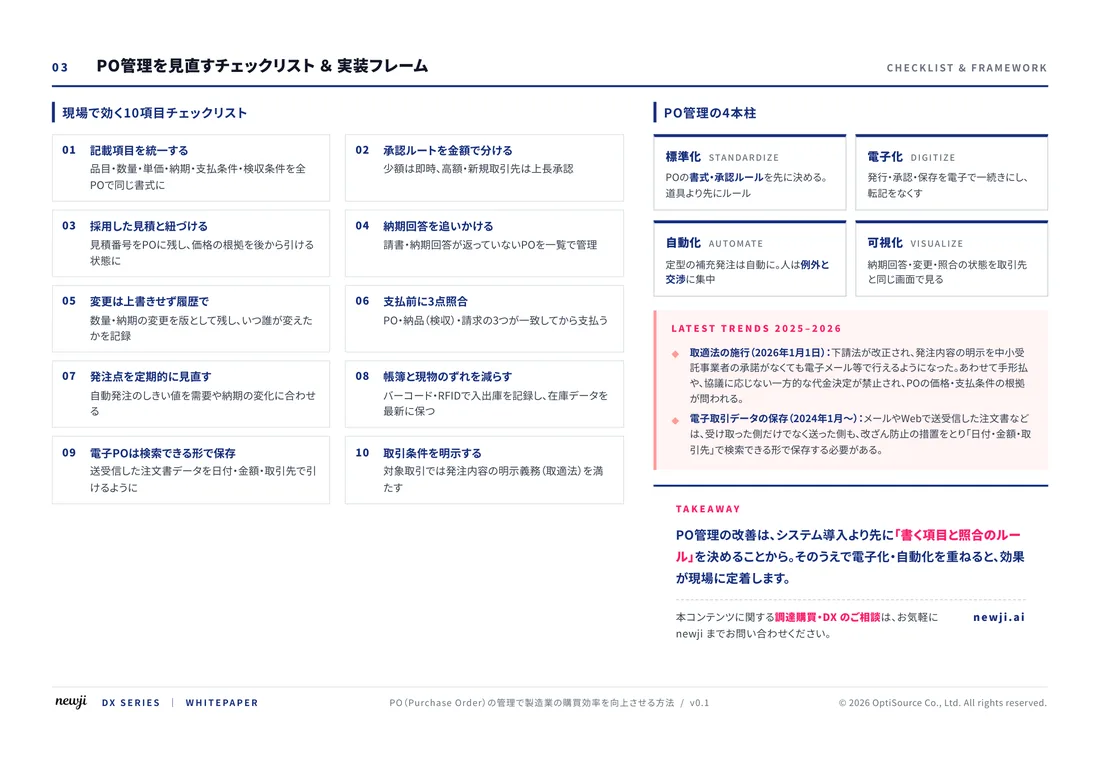
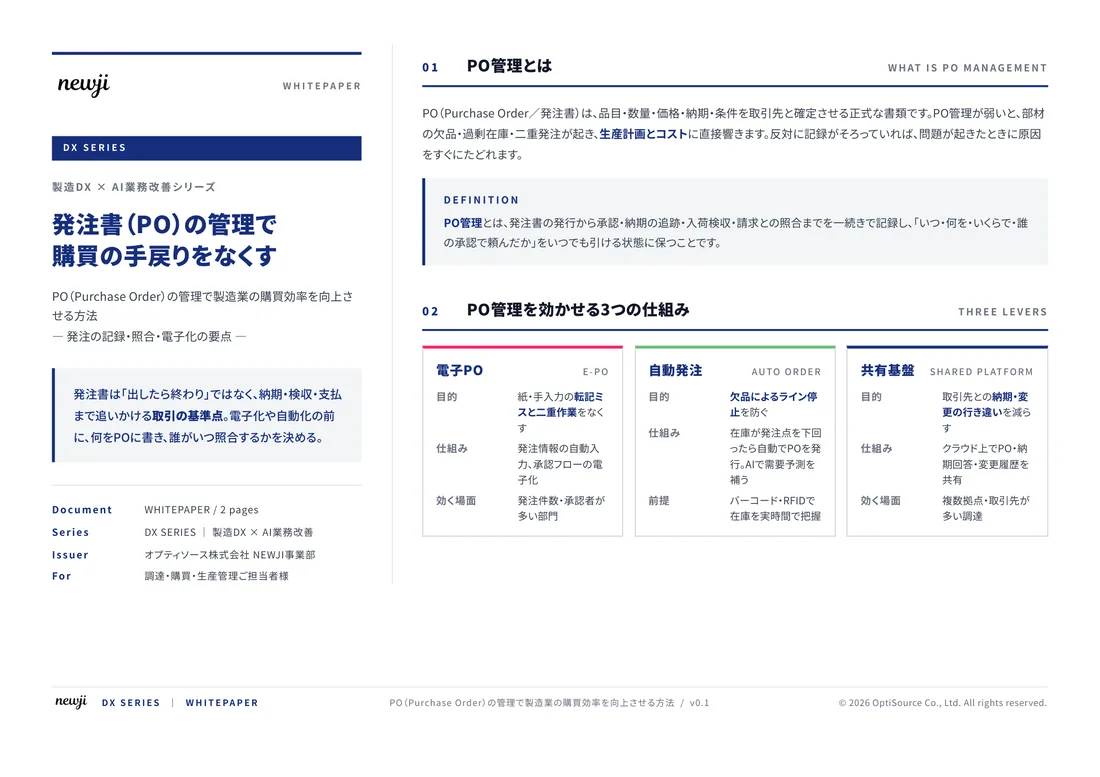
製造業の現場で使える実務資料(PDF)を無料でお届けします。"こんな資料が届きます" ↓ 下のボタンからどうぞ。
FREE DOCUMENT — サービス資料(PDF・無料)
製造業の見積・受発注クラウド
「Newji one」とは
Newji one は、製造業の調達・受発注に特化したクラウド/AIエージェント。見積依頼・発注書作成・進捗管理・承認をひとつの画面に集約し、AIが比較と異常検知を担当。最後の「GO」だけ人が押す仕組みです。
▶ 製造業の見積・受発注クラウド「Newji one」を、資料で見る(PDF・無料)
- 見積〜発注〜納期を一元管理。催促・転記のムダをゼロに
- AIが相見積もり比較と異常検知。あなたは判断だけに集中
- 取引先は「招待」で完全無料。自社コストだけで取引先ごとデジタル化
※ 取引先から招待された企業様は完全無料でご利用いただけます

 NEWJI総研
 OEM/ODM 生産委託
 AI/DX支援
 見積・発注クラウド Newji one
受発注が増えるほど、入力・確認・催促が重くなる。
受発注管理を“仕組み化“して、ミスと工数を削減しませんか。
見積・発注・納期まで一元管理できます。