

- お役立ち記事
- AI for Manufacturing Enabling Process Automation and Efficiency


AI for Manufacturing Enabling Process Automation and Efficiency

Artificial intelligence (AI) is transforming manufacturing by automating processes and improving efficiency. Using AI, manufacturers can optimize operations, reduce costs, improve quality, and gain insights from data in ways that were not possible before. Leading manufacturers are leveraging AI technologies like machine learning, computer vision, and natural language processing to drive advancements in automation, predict maintenance needs, power robotic systems, and more.
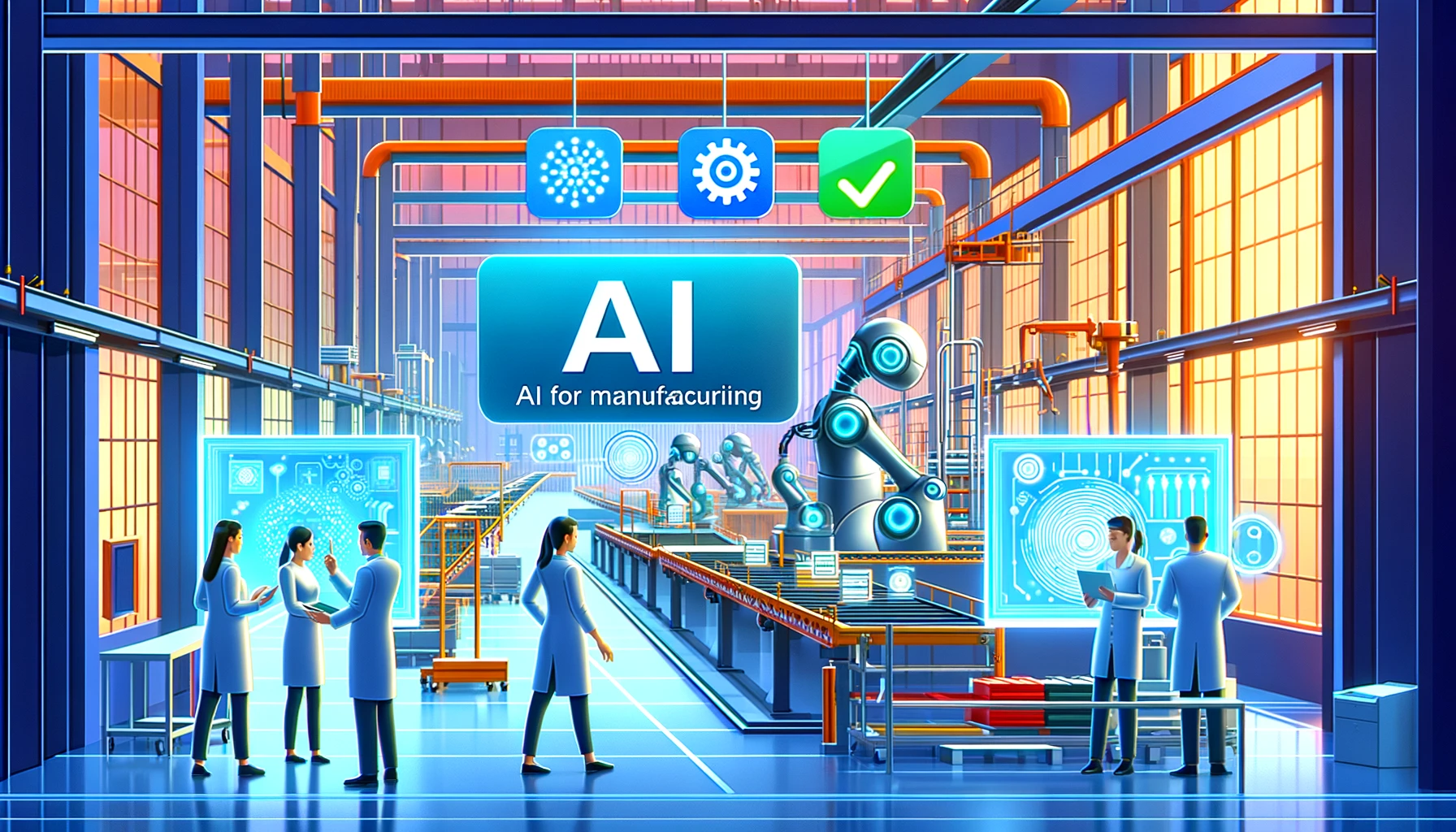
Some of the key ways that AI is enabling process automation and efficiency gains in manufacturing include:
Predictive Maintenance and Quality Control
AI and machine learning algorithms can analyze data from sensors monitoring equipment performance and detect anomalies that may indicate future breakdowns or quality issues. This enables condition-based and predictive maintenance where repairs and replacements are done proactively based on the actual condition and predicted remaining useful life of equipment. This reduces downtime from unexpected breakdowns and improves overall equipment effectiveness. Computer vision combined with deep learning is also widely used in quality control to automatically inspect products and detect defects with high accuracy.
Automated Process Control and Optimization
Sensors generating massive streams of real-time data from manufacturing processes provide insights for continuous improvement when analyzed with AI. Machine learning models can precisely map relationships between process parameters, equipment performance, and quality outcomes. This allows for self-optimizing systems that automatically adjust machine settings and operations in response to changing conditions to maximize throughput, yield, and product quality. AI-powered process control helps achieve optimal and consistent operations with less human intervention.
Robotics and Cobots for Automation
AI expands the capabilities of robotics by allowing autonomous mobile robots to navigate environments, detect and handle objects, and collaborate safely with humans. Computer vision enables robotic picking and sorting applications. Natural language processing enables voice interaction with robots for instructions. Integrating AI and robotics paves the way for more widespread use of collaborative robots or “cobots” working alongside people on flexible production lines. This reduces labor costs while keeping human skills and jobs involved.
Supply Chain Optimization
AI and predictive analytics are used to optimize supply chain planning and operations across procurement, production, distribution and logistics. Demand forecasting is improved through analysis of point-of-sale data, weather patterns, economic indicators and more. Machine learning algorithms recommend optimal inventory levels and replenishment schedules to minimize stockouts and overstocks. Route optimization helps delivery fleets utilize fuel and manpower most efficiently. Blockchain technology enhances supply chain transparency and traceability. Overall, AI delivers smarter, faster and more efficient supply chain management.
Process Modeling and Digital Twins
Advanced simulation and AI allow manufacturers to create digital twins – virtual replicas of physical systems, sites and processes. Digital twins integrated with real-time IoT and sensor data enable experimenting with “what if” scenarios to test improvements before implementation. Optimization of complex processes like molding, casting and assembly occurs through AI-powered digital modeling. This reduces physical prototyping needs and speeds up product development cycles.
Natural Language Interfaces
Conversational AI interfaces powered by natural language processing enable intuitive human-machine interaction for non-expert users. Voice assistants and chatbots answer questions, provide customized recommendations and help optimize production without traditional programming. They also leverage self-service capabilities for tasks like equipment maintenance scheduling and warehouse inventory checks. AI chatbots and digital assistants improve workflow efficiency, bolster user experience and free up expert human staff for more strategic work.
The Industrial Internet of Things (IIoT)
Integrating AI across vast networks of interconnected sensors, devices, systems and people creates intelligent, automated manufacturing ecosystems. Real-time analysis of streaming IIoT data through machine learning algorithms drives automated adjustments, predictive maintenance, quality assessment and more at an unprecedented scale. The proliferation of intelligent IIoT technologies will increasingly transform facilities into self-optimizing “smart factories” capable of running themselves.
While AI brings tremendous benefits for automation and efficiency gains, it also presents challenges regarding skills, safety and job disruption that manufacturers are addressing through retraining programs, governance frameworks and job transition support. Overall though, AI is proving to be a key technology enabling the next phase of industrial revolution through the fusion of physical and digital operations. Manufacturers embracing AI-driven transformations will gain significant competitive advantages in productivity, product quality and responsiveness to market needs.
In conclusion, AI is enabling unprecedented levels of automation and optimization in manufacturing processes through integrated applications of machine learning, computer vision, robotics and other advanced technologies. Combining AI with real-time IoT data provides insights to drive continuous improvement, predictive maintenance, autonomous operations and supply chain excellence. The greatest impacts will be realized as AI becomes more widespread across entire interconnected manufacturing ecosystems in the emerging era of intelligent Industry


 調達購買アウトソーシング
 OEM/ODM 生産委託
 NEWJI DX
 受発注AIエージェント