

- お役立ち記事
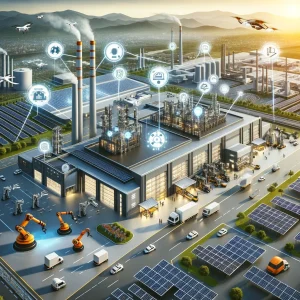
- The Transformation to Smart Factories How Technology is Revolutionizing Manufacturing?

その単価は妥当か。
AI が根拠付きで分析。
相見積の比較も発注も進捗管理も、ひとつの画面に。

The Transformation to Smart Factories How Technology is Revolutionizing Manufacturing?
In recent years, the manufacturing industry has undergone a significant transformation with the advent of new technologies and digitalization. This has led to the rise of smart factories, where advanced technological systems and processes are integrated to improve efficiency, productivity, and overall operations. In this article, we will explore the concept of smart factories and how they are revolutionizing the manufacturing industry.
目次
What are Smart Factories?
Smart factories, also known as Industry 4.0 or the Fourth Industrial Revolution, refer to manufacturing facilities that have embraced automation, digitization, and connectivity to optimize production processes. They leverage cutting-edge technologies such as Internet of Things (IoT), artificial intelligence (AI), big data analytics, and cloud computing to create an advanced and interconnected ecosystem.
Key Technologies Transforming Manufacturing:
1. Internet of Things (IoT):
IoT allows physical devices, sensors, and machines to communicate and share data with each other. In a smart factory, IoT enables real-time monitoring and control of manufacturing processes, leading to improved efficiency and reduced downtime.
2. Artificial Intelligence (AI):
AI technologies, including machine learning and predictive analytics, enable smart factories to make data-driven decisions and optimize production processes. AI-powered algorithms can analyze vast amounts of data, identify patterns, predict failures, and optimize equipment performance.
3. Big Data Analytics:
Smart factories generate vast amounts of data from various sources within the manufacturing ecosystem. Big data analytics helps in collecting, analyzing, and interpreting this data to uncover valuable insights, identify bottlenecks, and optimize processes for better performance.
4. Robotics and Automation:
Robots and automation play a crucial role in smart factories, performing repetitive tasks with precision and speed, reducing human error, and improving overall productivity. Collaborative robots, or cobots, work alongside humans, enhancing efficiency and safety on the factory floor.
Benefits of Smart Factories:
1. Improved Efficiency: Smart factories streamline production processes, reduce waste, and increase overall efficiency. Real-time data and insights enable proactive decision-making and process optimization.
2. Enhanced Productivity: Automation and digitization lead to increased productivity by eliminating manual tasks, reducing errors, and enabling faster production cycles. Workers can focus on higher-value tasks that require critical thinking and creativity.
3. Cost Reduction: Smart factories can identify cost-saving opportunities through real-time monitoring of energy consumption, predictive maintenance, and inventory optimization. Furthermore, reduced downtime and optimized workflows improve cost efficiency.
4. Quality Control: Advanced technologies like AI and machine learning enable continuous quality monitoring and control. Defects can be detected and corrected in real-time, enhancing the quality of products and reducing waste.
5. Flexibility and Adaptability: Smart factories can quickly adapt to changing market demands, allowing manufacturers to produce customized products with shorter lead times. This flexibility enables manufacturers to meet customer expectations and gain a competitive edge.
The transformation towards smart factories is revolutionizing the manufacturing industry, bringing about significant improvements in efficiency, productivity, and overall competitiveness. By leveraging advanced technologies such as IoT, AI, big data analytics, and automation, manufacturers can optimize their production processes, reduce costs, enhance quality control, and adapt to the ever-changing market dynamics. Embracing this digital transformation is crucial for manufacturers to thrive in the age of Industry 4.0 and stay ahead in a highly competitive global market.
この記事の理解を深める
無料ホワイトペーパーをプレゼント
製造業の現場で使える実務資料(PDF)を無料でお届けします。"こんな資料が届きます" ↓ 下のボタンからどうぞ。


FREE DOCUMENT — サービス資料(PDF・無料)
見積依頼から比較まで、
ひとつの画面にまとめる方法
Newji one は、製造業の調達・受発注に特化したクラウド/AIエージェント。見積依頼・発注書作成・進捗管理・承認をひとつの画面に集約し、AIが比較と異常検知を担当。最後の「GO」だけ人が押す仕組みです。
▶ 見積依頼から比較までをひとつの画面にまとめる方法を、資料で見る(PDF・無料)
- 見積〜発注〜納期を一元管理。催促・転記のムダをゼロに
- AIが相見積もり比較と異常検知。あなたは判断だけに集中
- 取引先は「招待」で完全無料。自社コストだけで取引先ごとデジタル化
※ 取引先から招待された企業様は完全無料でご利用いただけます

 NEWJI総研
 OEM/ODM 生産委託
 AI/DX支援
 見積・発注クラウド Newji one
受発注が増えるほど、入力・確認・催促が重くなる。
受発注管理を“仕組み化“して、ミスと工数を削減しませんか。
見積・発注・納期まで一元管理できます。