

- お役立ち記事
- Fundamentals of the Pharmaceutical and Medical Device Act and key points for medical device and software development

Fundamentals of the Pharmaceutical and Medical Device Act and key points for medical device and software development

The Pharmaceutical and Medical Device Act is a critical piece of legislation that governs the development, production, and distribution of medical devices and pharmaceuticals.
Understanding its fundamentals is essential for anyone involved in medical device and software development.
This article will cover the key points of the Act and important considerations for developing medical devices and software under its framework.
目次
Overview of the Pharmaceutical and Medical Device Act
The Pharmaceutical and Medical Device Act, also known as the PMD Act, was initially enacted to ensure the safety, efficacy, and quality of pharmaceuticals and medical devices in the market.
It serves as a regulatory framework to protect public health by establishing standards and procedures for the approval, monitoring, and enforcement of these products.
The Act requires stakeholders, including manufacturers, distributors, and healthcare providers, to comply with specific guidelines to maintain quality and safety standards.
Regulatory Authorities
Under the PMD Act, regulatory authorities play a crucial role in overseeing the compliance of medical devices and pharmaceuticals.
In many countries, this responsibility falls to organizations like the U.S. Food and Drug Administration (FDA) or the European Medicines Agency (EMA).
These authorities conduct assessments, approve new products, and ensure ongoing monitoring of products once they are on the market.
Understanding the role and expectations of these regulatory bodies is crucial for developers and manufacturers seeking approval for their products.
Key Points for Medical Device Development
Developing a medical device involves a comprehensive process that must adhere to regulatory guidelines.
These key points outline some essential considerations for developers:
Classification of Medical Devices
Medical devices are categorized into different classes based on their intended use and potential risk to patients.
In the U.S., the FDA classifies devices into Class I, II, or III, with Class III posing the highest risk and requiring the most stringent controls.
Understanding the classification of your device is crucial as it dictates the level of regulatory scrutiny and approval process required.
Design and Development
The design and development of a medical device should prioritize patient safety and product efficacy.
Developers must establish stringent quality control measures, robust design processes, and thorough testing protocols.
Documenting every stage of development is essential for compliance with regulatory standards and accelerates the approval process.
Pre-Market Approval
Before a medical device can be marketed, it must receive pre-market approval from the relevant regulatory authority.
For higher-risk devices, extensive clinical trials and evidence of safety and effectiveness are required.
Engaging with regulatory authorities early in the development process can help streamline the pre-market approval phase.
Key Points for Software Development in Medical Devices
As technology advances, software has become an integral part of many medical devices.
Developing software solutions within the framework of the PMD Act requires attention to several factors:
Software as a Medical Device (SaMD)
Software intended for medical purposes that perform actions without being part of a hardware device is known as Software as a Medical Device (SaMD).
Developers must determine if their software qualifies as SaMD, as this affects regulatory requirements and the approval pathway.
Usability and Human Factors
Software developers must consider usability and human factors to ensure that their products can be used safely and effectively by healthcare professionals and patients.
Incorporating user feedback and testing usability in real-world scenarios are crucial for identifying potential risks and mitigating them.
Cybersecurity Measures
With the increasing connectivity of medical devices, safeguarding patient data and device functionality from cyber threats is paramount.
Implementing robust cybersecurity measures and maintaining them through regular updates and patches is essential for compliance and product reliability.
Post-Market Surveillance and Compliance
Even after a product has been approved and marketed, post-market surveillance plays a significant role in ensuring ongoing safety and effectiveness.
Monitoring and Reporting
Manufacturers are required to monitor their products for adverse events and report any incidents to the regulatory authorities promptly.
This ongoing vigilance helps to identify potential risks that may not have been evident during pre-market testing.
Product Modifications and Continuous Improvement
Any modifications made to a medical device or its associated software after approval must be documented and, in some cases, submitted for review by regulatory authorities.
Continuous improvement based on post-market feedback is essential for maintaining compliance and enhancing product efficacy.
In conclusion, understanding the fundamentals of the Pharmaceutical and Medical Device Act is indispensable for anyone involved in developing medical devices or software.
By adhering to regulatory guidelines, prioritizing safety and efficacy, and maintaining thorough documentation, developers can successfully navigate the complex landscape of medical device and software development.
Staying informed about evolving regulations and engaging with regulatory bodies throughout the development process can facilitate smoother product approvals and ultimately lead to safer healthcare solutions.
この記事の理解を深める
無料ホワイトペーパーをプレゼント
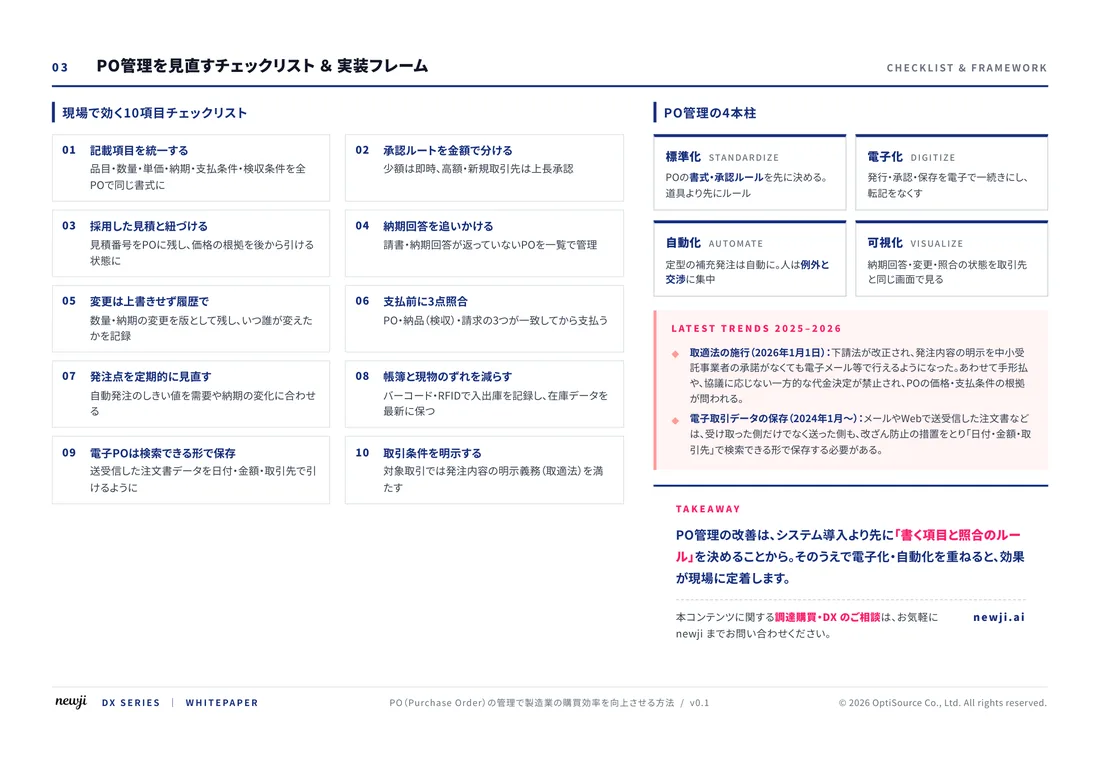
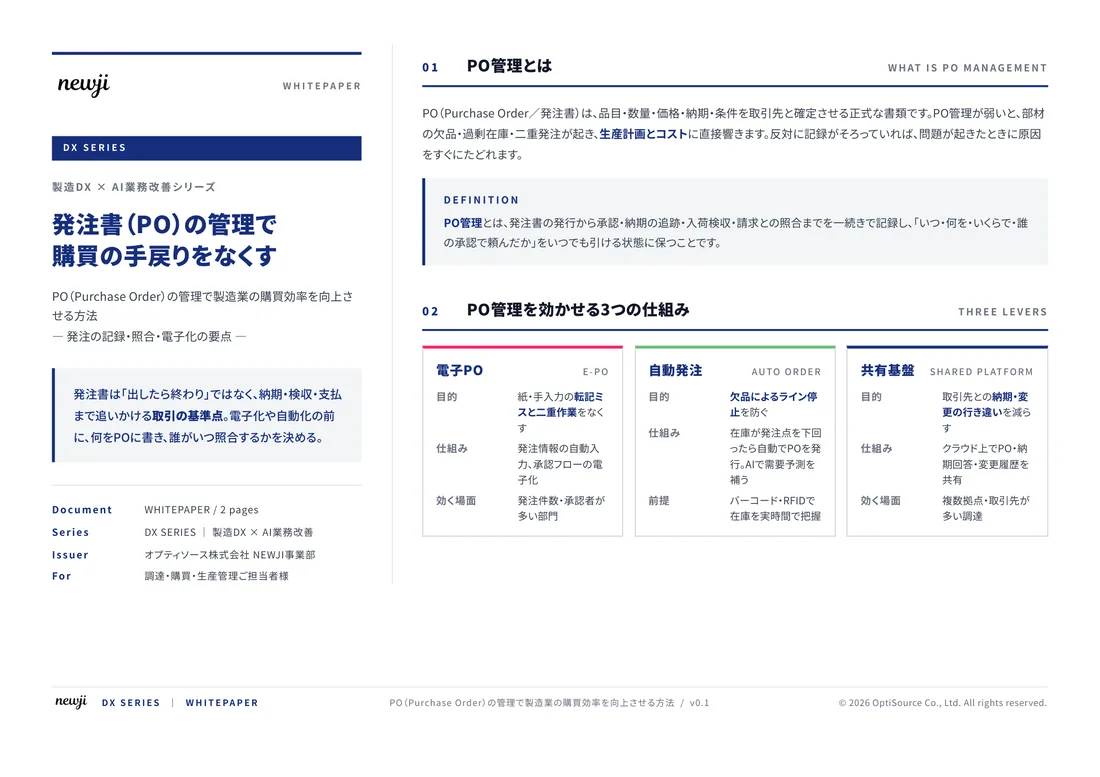
製造業の現場で使える実務資料(PDF)を無料でお届けします。"こんな資料が届きます" ↓ 下のボタンからどうぞ。
FREE DOCUMENT — サービス資料(PDF・無料)
製造業の見積・受発注クラウド
「Newji one」とは
Newji one は、製造業の調達・受発注に特化したクラウド/AIエージェント。見積依頼・発注書作成・進捗管理・承認をひとつの画面に集約し、AIが比較と異常検知を担当。最後の「GO」だけ人が押す仕組みです。
▶ 製造業の見積・受発注クラウド「Newji one」を、資料で見る(PDF・無料)
- 見積〜発注〜納期を一元管理。催促・転記のムダをゼロに
- AIが相見積もり比較と異常検知。あなたは判断だけに集中
- 取引先は「招待」で完全無料。自社コストだけで取引先ごとデジタル化
※ 取引先から招待された企業様は完全無料でご利用いただけます
関連記事
-

Simyog Compliance-Scopeで製造業の営業力を劇的に強化する方法
-

EUで策定が進み、対応が急務となっている「Cyber Resilience Act(CRA)法」の概要と対策のポイント
-

Transforming Modern Electronics: Unleashing the Potential of Silicon-on-Insulator (SOI) Technology for Enhanced Industry Recognition and Market Expansion
-

PDCAサイクルの運用と活用: 品質改善と業務効率化のためのサイクルマネジメント
-
有効成分 (Active Pharmaceutical Ingredient) の管理と製造業での利用方法
-
Simyog Compliance-Scopeを活用した調達購買の効率化戦略
 NEWJI総研
 OEM/ODM 生産委託
 AI/DX支援
 見積・発注クラウド Newji one
受発注が増えるほど、入力・確認・催促が重くなる。
受発注管理を“仕組み化“して、ミスと工数を削減しませんか。
見積・発注・納期まで一元管理できます。