

- お役立ち記事
- Effective development method of highly reliable in-vehicle software and its application to quality assurance and safety assurance

Effective development method of highly reliable in-vehicle software and its application to quality assurance and safety assurance

目次
Introduction to In-Vehicle Software Development
In-vehicle software plays a crucial role in modern vehicles, controlling everything from engine performance to in-cabin entertainment systems.
With the increasing complexity of automotive technology, the demand for reliable and safe software is on the rise.
This has made the development and quality assurance of in-vehicle software a priority for manufacturers.
Ensuring software reliability and safety is not only about meeting regulatory standards but also about enhancing customer satisfaction and trust.
The Importance of Reliable In-Vehicle Software
Reliable in-vehicle software is vital for numerous reasons.
Firstly, it directly impacts vehicle performance and efficiency.
Software errors can lead to reduced fuel efficiency or even vehicle breakdowns, which can be costly and inconvenient.
Secondly, reliable software ensures the safety of the vehicle’s occupants.
Safety-critical systems like braking and steering rely heavily on robust software.
Any malfunction in these systems due to software failures can have severe consequences.
Lastly, in-vehicle software plays a significant role in customer perception and brand reputation.
A vehicle with frequent software issues can damage a brand’s image and erode customer loyalty.
Key Principles for Developing Reliable In-Vehicle Software
Developers must adhere to several key principles to create highly reliable in-vehicle software.
Thorough Requirement Analysis
The first step in developing reliable software is a thorough requirements analysis.
Understanding the specific needs of the vehicle’s systems helps in creating software that meets these demands without unnecessary complexity.
This reduces the risk of errors and vulnerabilities.
Robust Software Architecture
A robust architecture is the backbone of reliable software.
It involves designing a system that can handle errors gracefully and maintain functionality under different conditions.
This includes implementing redundancy, fail-safes, and clear communication protocols between different software modules.
Code Quality and Testing
High-quality code is less prone to errors.
Developers should adhere to coding standards, use code reviews, and employ static analysis tools to ensure code quality.
Extensive testing, including unit tests, integration tests, and system tests, should be conducted to identify and fix potential issues early in the development process.
Quality Assurance in In-Vehicle Software
Quality assurance (QA) is a critical component of in-vehicle software development.
It involves systematic monitoring and evaluation of the software to ensure that it meets the desired quality standards.
Test-Driven Development (TDD)
Test-Driven Development is an approach where tests are written before the actual code.
This method ensures that every piece of code has a corresponding test, enhancing the reliability of the software.
TDD helps identify potential issues early, making them easier and cheaper to fix.
Continuous Integration and Deployment (CI/CD)
CI/CD practices involve frequent integration of code changes and automated testing.
These practices enable developers to detect issues quickly and deploy updates efficiently, maintaining the software’s reliability and security.
Risk Management
Risk management is an integral part of quality assurance.
It involves identifying potential risks in the software development process and implementing strategies to mitigate those risks.
This includes regular security assessments and performance evaluations.
Safety Assurance in In-Vehicle Software
Ensuring safety in in-vehicle software is crucial, as software failures can lead to accidents and endanger lives.
Adherence to Safety Standards
Compliance with industry safety standards, such as ISO 26262, is essential.
These standards provide guidelines for designing and testing safety-critical automotive systems, ensuring that they meet rigorous safety requirements.
Failure Mode and Effects Analysis (FMEA)
FMEA is a systematic approach to identifying potential failure modes and their impacts on the system.
By analyzing potential failures, developers can design solutions to prevent them from occurring, thereby enhancing safety.
Safety-Critical Systems Isolation
Safety-critical systems should be isolated from non-critical systems to prevent unintended interactions.
This isolation ensures that even if non-critical systems fail, critical functions like braking and steering continue to operate safely.
Real-World Applications and Case Studies
The principles and practices discussed are applied in real-world scenarios by numerous automotive manufacturers.
Case Study: Electric Vehicles
Electric vehicles (EVs) rely heavily on software for battery management, charging systems, and driving assistance technologies.
Manufacturers of EVs focus extensively on software reliability and safety, often using advanced simulation and testing techniques to ensure high performance and safety standards.
Case Study: Autonomous Vehicles
Autonomous vehicles represent the pinnacle of in-vehicle software complexity.
These vehicles require highly reliable and safe software to navigate roads without human intervention.
Manufacturers employ rigorous testing and validation processes to develop software capable of handling myriad driving scenarios safely.
Conclusion
The development of highly reliable in-vehicle software is critical for the performance, safety, and reputation of modern vehicles.
By focusing on robust design principles, thorough testing, and compliance with safety standards, manufacturers can ensure that their software meets the highest quality and safety requirements.
As automotive technology continues to evolve, maintaining a strong focus on reliability and safety in software development will be more important than ever.
この記事の理解を深める
無料ホワイトペーパーをプレゼント
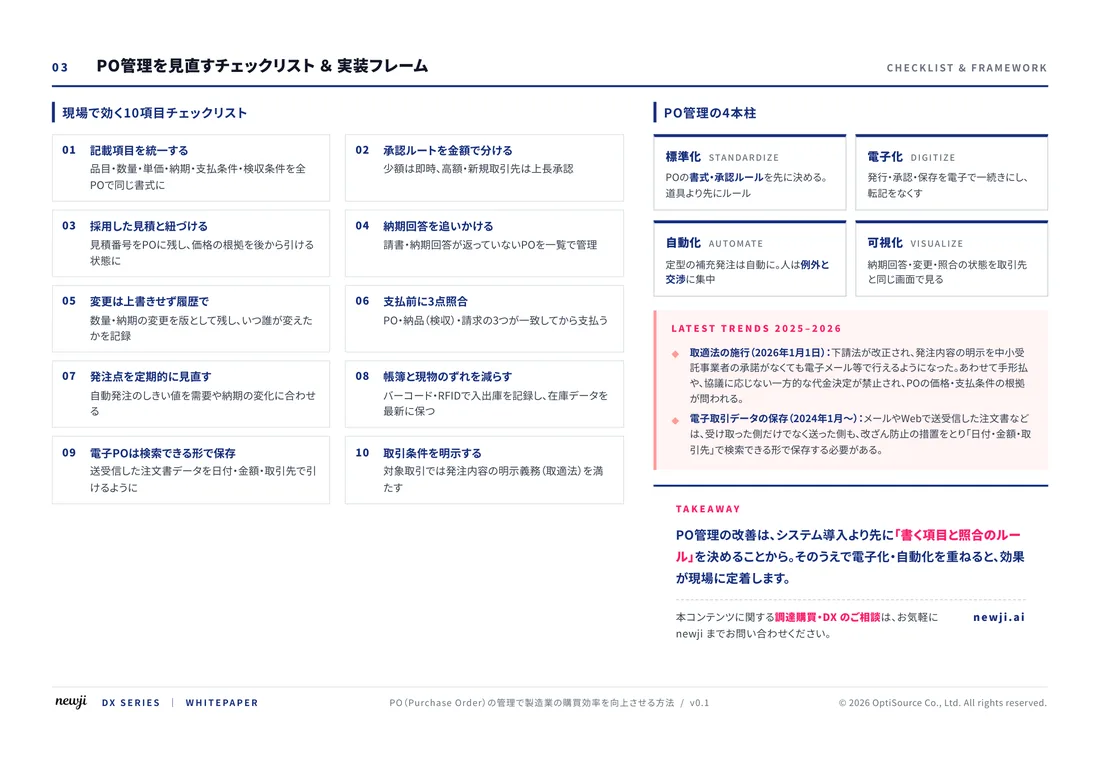
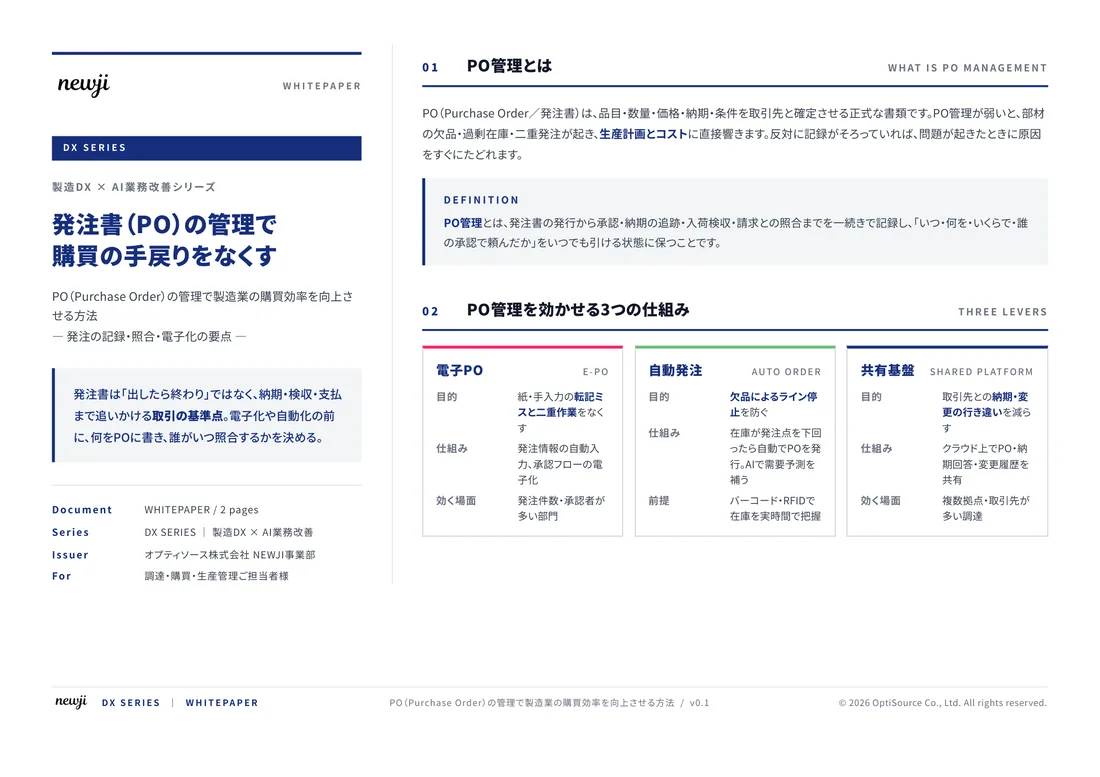
製造業の現場で使える実務資料(PDF)を無料でお届けします。"こんな資料が届きます" ↓ 下のボタンからどうぞ。
FREE DOCUMENT — サービス資料(PDF・無料)
製造業の見積・受発注クラウド
「Newji one」とは
Newji one は、製造業の調達・受発注に特化したクラウド/AIエージェント。見積依頼・発注書作成・進捗管理・承認をひとつの画面に集約し、AIが比較と異常検知を担当。最後の「GO」だけ人が押す仕組みです。
▶ 製造業の見積・受発注クラウド「Newji one」を、資料で見る(PDF・無料)
- 見積〜発注〜納期を一元管理。催促・転記のムダをゼロに
- AIが相見積もり比較と異常検知。あなたは判断だけに集中
- 取引先は「招待」で完全無料。自社コストだけで取引先ごとデジタル化
※ 取引先から招待された企業様は完全無料でご利用いただけます
関連記事
-

R言語を活用したデータマイニング技術の基礎と時系列解析テキスト分析の実践ノウハウ
-
TensorflowとKerasによる深層学習のプログラム実装実践講座
-
英文メール定型文30選:見積・仕様変更・是正要求・納期交渉の例文集
-
Rを用いた多変量解析の基本操作と因子分析回帰分析の実践演習
-

Transforming Modern Electronics: Unleashing the Potential of Silicon-on-Insulator (SOI) Technology for Enhanced Industry Recognition and Market Expansion
-

Daihatsu Suspends Shipments of All Models Due to Quality Fraud
 NEWJI総研
 OEM/ODM 生産委託
 AI/DX支援
 見積・発注クラウド Newji one
受発注が増えるほど、入力・確認・催促が重くなる。
受発注管理を“仕組み化“して、ミスと工数を削減しませんか。
見積・発注・納期まで一元管理できます。