
Manufacturing DX Design
Manufacturing DX is determined by
"design" — before implementation.
Deploying tools alone won't move the floor.
That's why we spend 3–12 months in focused design
to build a DX structure that keeps running.
Design Period
3 / 6 / 12 Months
Deliverables
DX Roadmap
To-Be Workflows
Operating Model
Target Teams
Management, Procurement, Sales
R&D, Quality, Finance
General Affairs, and more
Manufacturing DX stalls —
and the root cause isn't on the shop floor.
Tool adoption becomes the goal
Processes are not defined
Progress stalls between departments
No operating rules in place
Roles and accountability are unclear
No visible results — teams give up
That's why NEWJI DX delivers "design" — not just implementation.
Discuss Your DX DesignNEWJI DX is a "Design Lab" —
purpose-built for DX design.
Before selecting tools or building systems, we design the structures that make your organization move.
DX Vision
We design the shared language — a clear "why" that both leadership and the shop floor can align on.
DX Roadmap
We prioritize workflows, resources, and risks, then build a 3–12 month action plan.
DX Operating Model
We define who does what and when, with clear weekly/monthly operating rules and accountability.
First, digitize — then make operations flow
Digitization
The first stage: consolidate data scattered across paper, fax, and Excel into a single source and make information visible.
- Digitizing paper slips
- Registering fax orders in a system
- Moving from Excel management to a database
Digitalization
The second stage: redesign business processes and use data to automate and drive operational efficiency.
- Business process redesign
- Approval process automation
- Cross-department coordination optimization
Most companies stall after digitizing data. →NEWJI takes you all the way to a "self-running" operating design.
Everything we design in your DX engagement
As-Is Process Inventory
Visualize current workflow
Issue Register
Document all identified challenges
To-Be Workflow
Design the target-state process
DX Roadmap
3–12 month action plan
Organization Design
Define roles and accountability
Operating Rules
Weekly/monthly operating cadence
Approval & Authorization Design
Optimize decision-making flow
Tool Selection
Right-sized tool recommendations
KPI Design
Define measurement metrics
DX Design Plans
Focused Design Engagement: 3–12 months
3 Months
DX Design Sprint
900,000 JPY (excl. tax) ≈ US$6,000
Best for
Companies that want to start small
How it works
- 1Current-state analysis (1 month)
- 2Design & planning (1.5 months)
- 3Launch preparation (0.5 months)
Key deliverables
- As-Is Process Inventory
- Issue Register
- To-Be Workflow
6 Months
DX Design Standard
1,680,000 JPY (excl. tax) ≈ US$11,200
approx. 280,000 JPY/month
Best for
Companies ready to commit to full-scale DX
How it works
- 1Current-state analysis (1.5 months)
- 2Design & planning (3 months)
- 3Adoption & handoff (1.5 months)
Key deliverables
- All DX Design Sprint deliverables
- DX Roadmap
- Organization Design
- Operating Rules
12 Months
DX Design Partner
2,880,000 JPY (excl. tax) ≈ US$19,200
approx. 240,000 JPY/month
Best for
Companies pursuing long-term organizational transformation
How it works
- 1Current-state analysis (2 months)
- 2Design & planning (5 months)
- 3Adoption support (5 months)
Key deliverables
- All DX Design Standard deliverables
- Approval & Authorization Design
- Tool Selection
- KPI Design
* All prices exclude tax. USD figures are approximate, calculated at the exchange rate at the time of writing (1 USD ≈ 150 JPY), and are for reference only.
DX Companion Plans
After the design phase, we stay alongside you as a partner through the execution journey.
Monthly
Online Coaching
200,000 JPY/month (excl. tax) ≈ US$1,333/mo
Best for
Companies that are self-driving DX execution after design and want periodic expert guidance
What's included
- 2 online check-ins per month (60 min each)
- Async chat Q&A
- Progress reviews and course corrections
- Tool setup and configuration support
- Internal training session planning
Monthly
AI Agent Coaching
80,000 JPY/month (excl. tax) ≈ US$533/mo
Best for
Companies that want to automate and streamline operations with AI after design — and drive continuous improvement without adding headcount
What's included
- AI agent initial setup and deployment
- Automating workflows via skills
- Continuous prompt and configuration tuning
- Expanding to new workflows
- Monthly reports and improvement proposals
Monthly
On-Site Coaching
Contact us
Best for
Companies that need a partner embedded on-site — factory floor, warehouse, or office visits required
What's included
- All Online Coaching content
- 1–2 on-site visits per month
- On-site interviews and process observation
- Direct dialogue with internal key stakeholders
- Co-attendance at executive progress reviews
The right tool isn't about "good vs. bad" —
it's determined by your scale and how it will be operated.
We help you select the tools that fit your challenges and company size.
Task Management
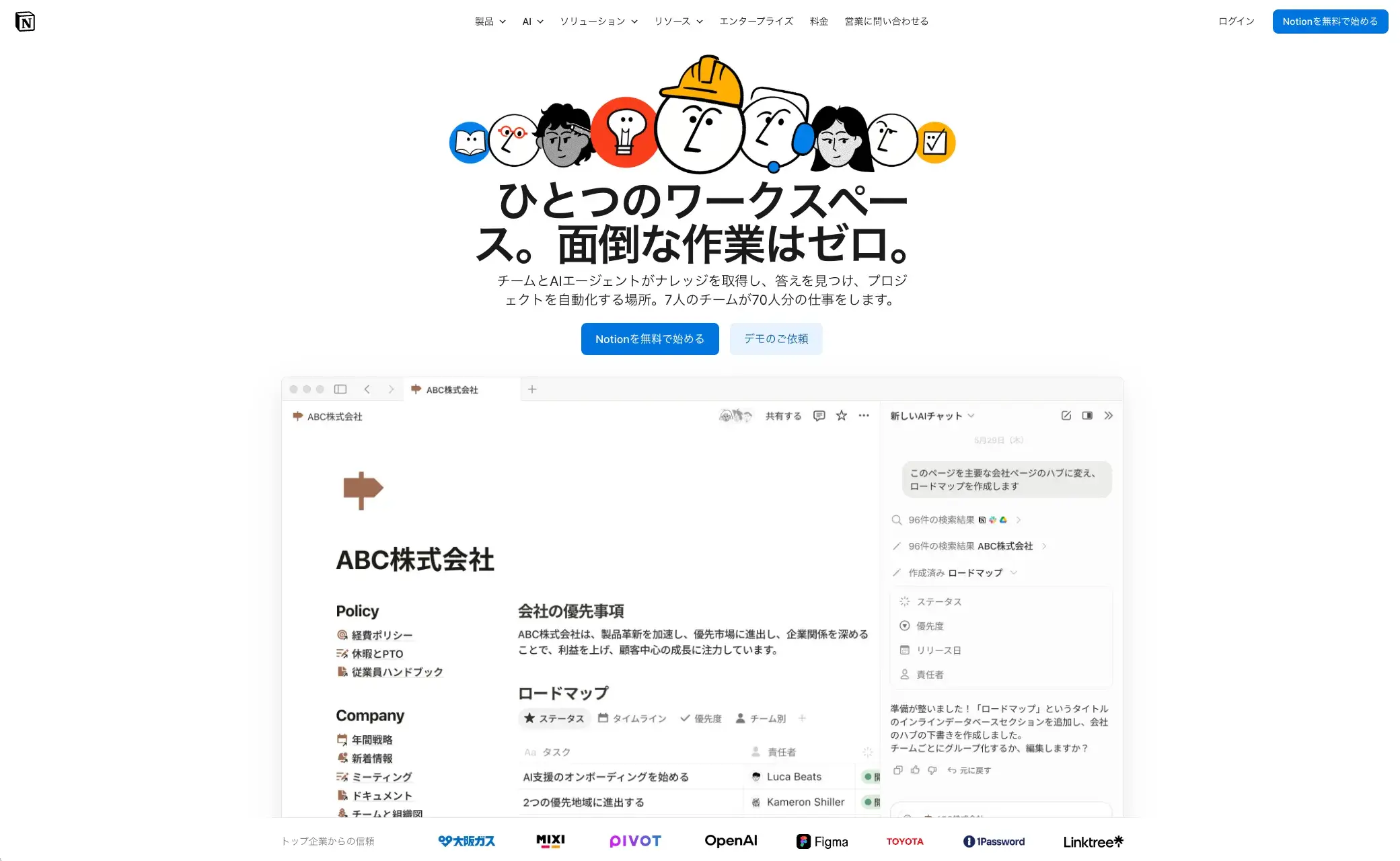
Notion
- Start with: task board
- Common pitfall: structure becomes too complex
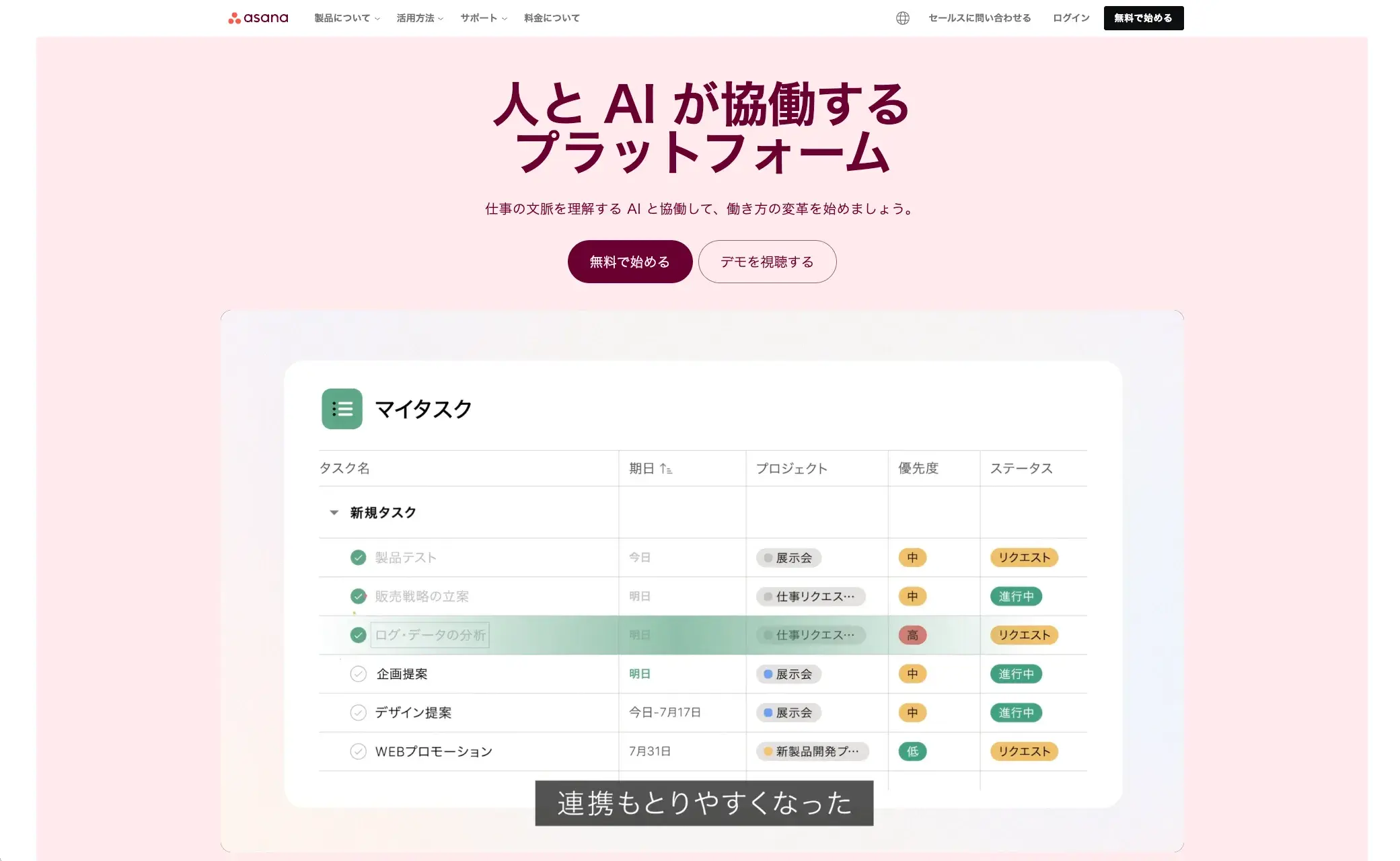
Asana
- Start with: project management
- Common pitfall: abandoned due to underutilization
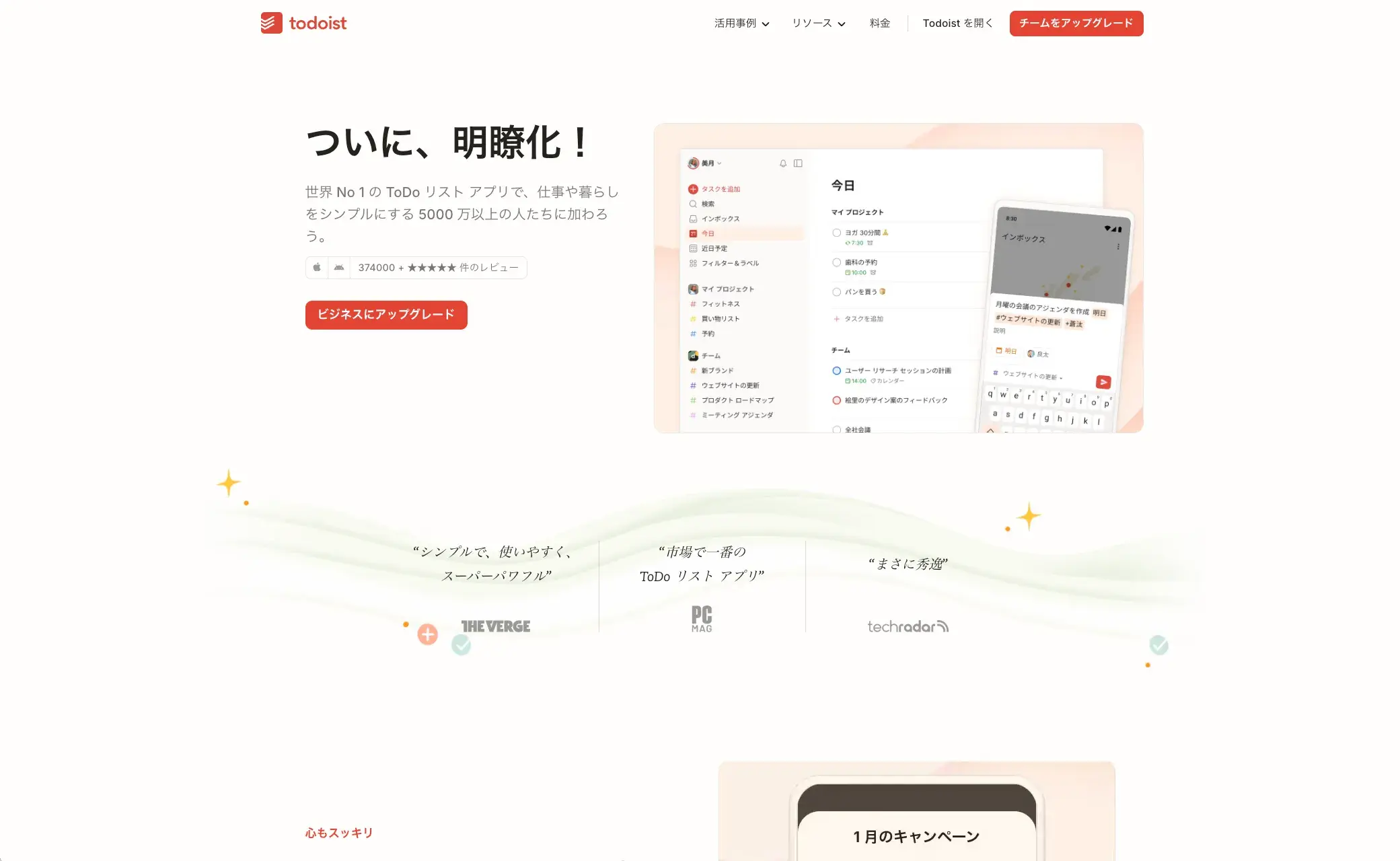
Todoist
- Start with: project management
- Common pitfall: abandoned due to underutilization
Communication
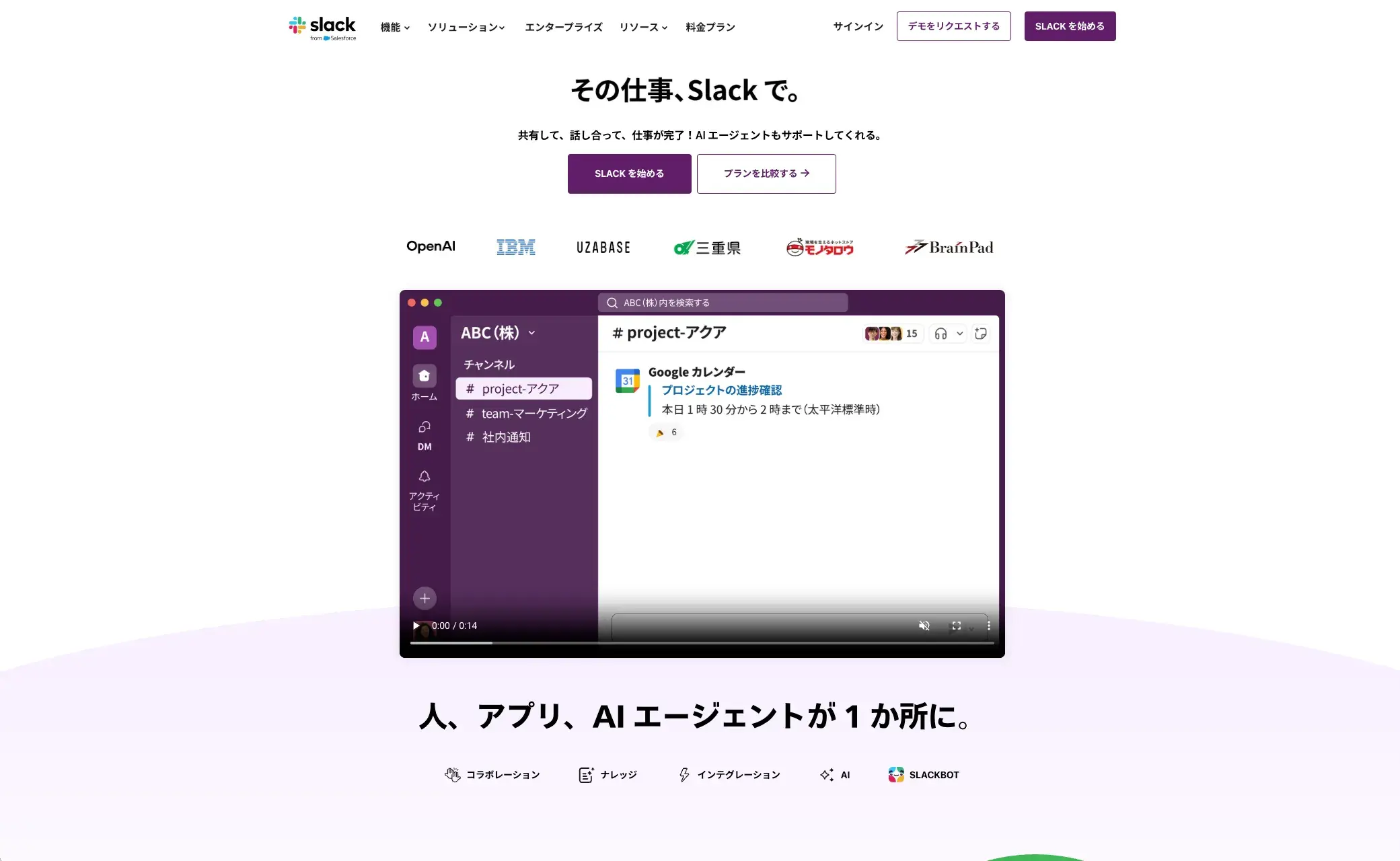
Slack
- Start with: channel structure
- Common pitfall: notification overload leads to disengagement
Teams
- Start with: video meetings
- Common pitfall: confusion from running in parallel with email
LINE WORKS
- Start with: video meetings
- Common pitfall: confusion from running in parallel with email
Workflow Automation
n8n
- Start with: simple integrations
- Common pitfall: can't keep up with error handling
Zapier
- Start with: approval flows
- Common pitfall: building too many automations without a design plan
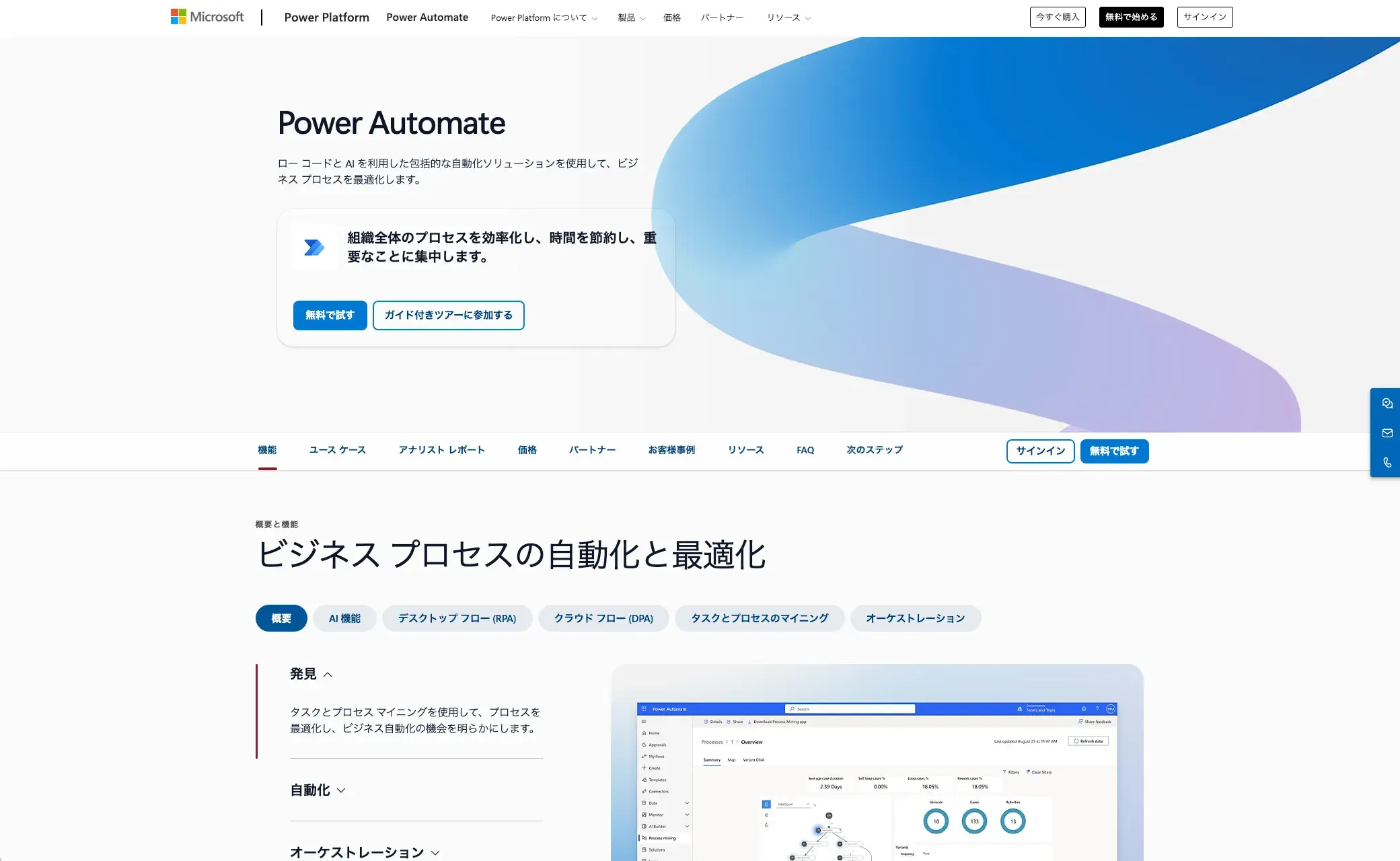
Power Automate
- Start with: approval flows
- Common pitfall: building too many automations without a design plan
Recommended Tools for Manufacturing
From the wide range of DX tools available globally, we recommend the optimal fit for your vision and workflows.
If you'd like guidance on how to organize your manufacturing operations for DX, reach out for a consultation.
In-Person Productivity Tools
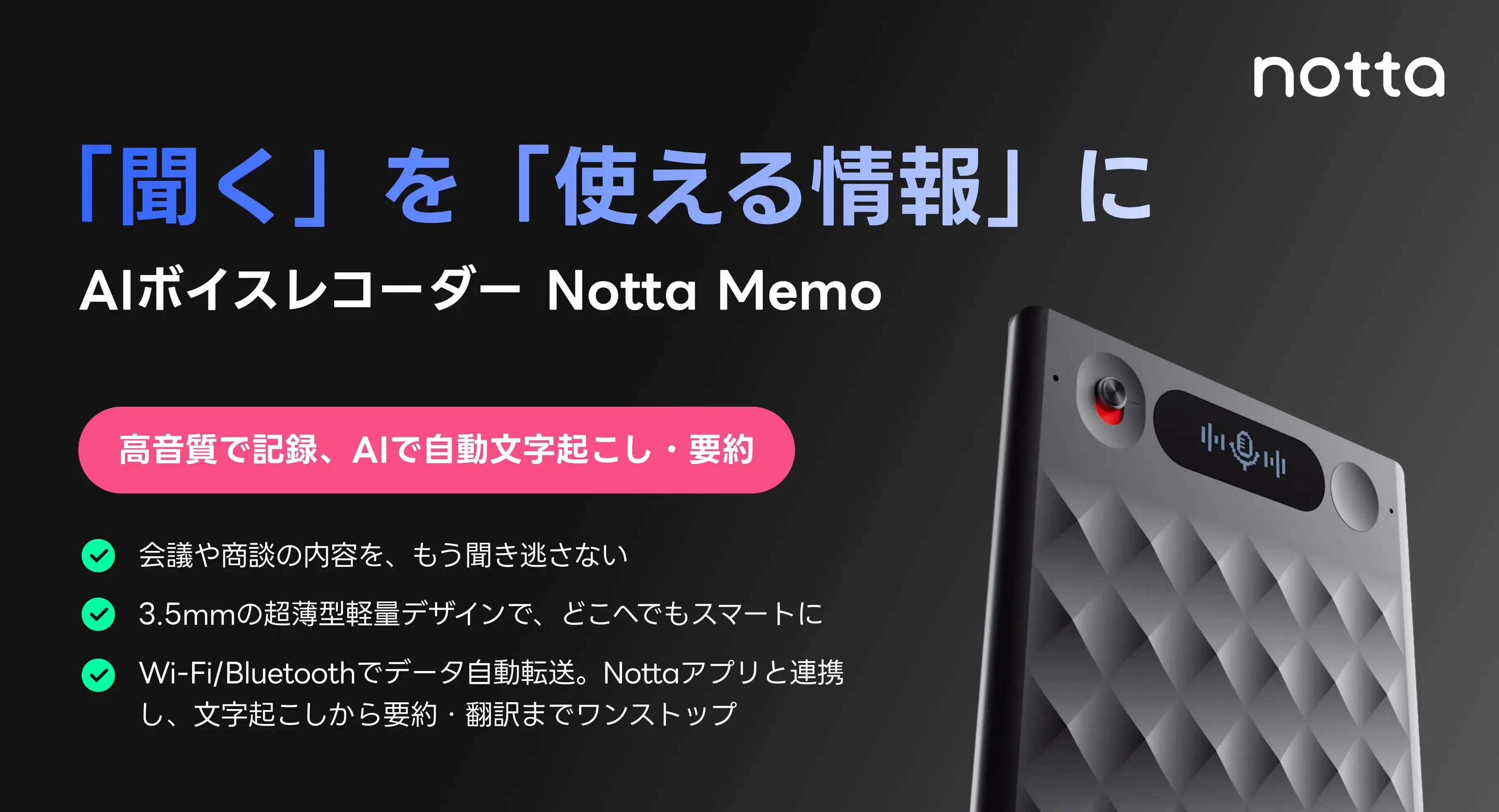

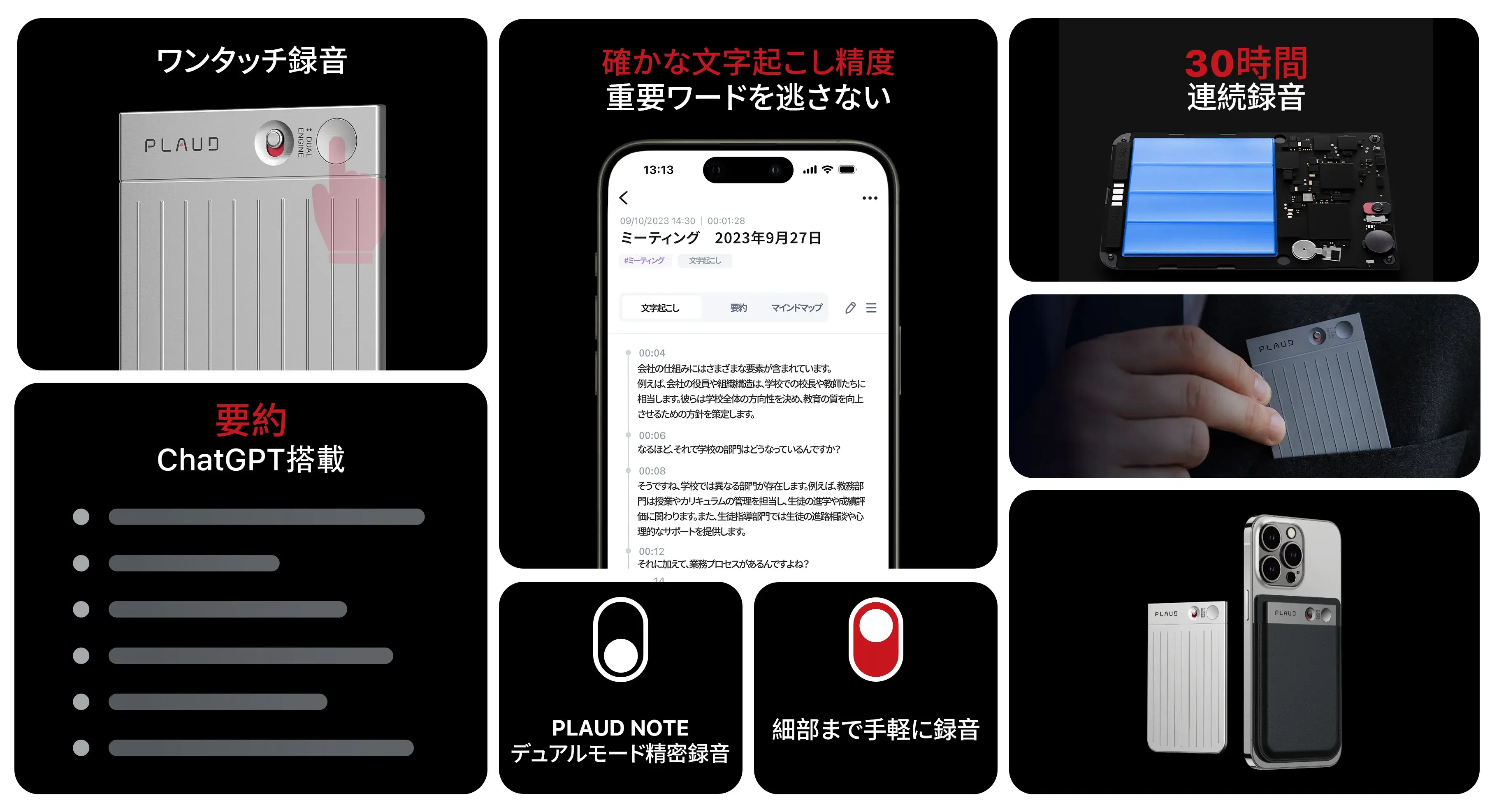

Use AI to gather the information you need to decide.
AI tools are not all-powerful. We design the right usage pattern for your workflows.
Meeting Minutes Automation
Recommended tools

First-Response Ticket Handling
Recommended tools
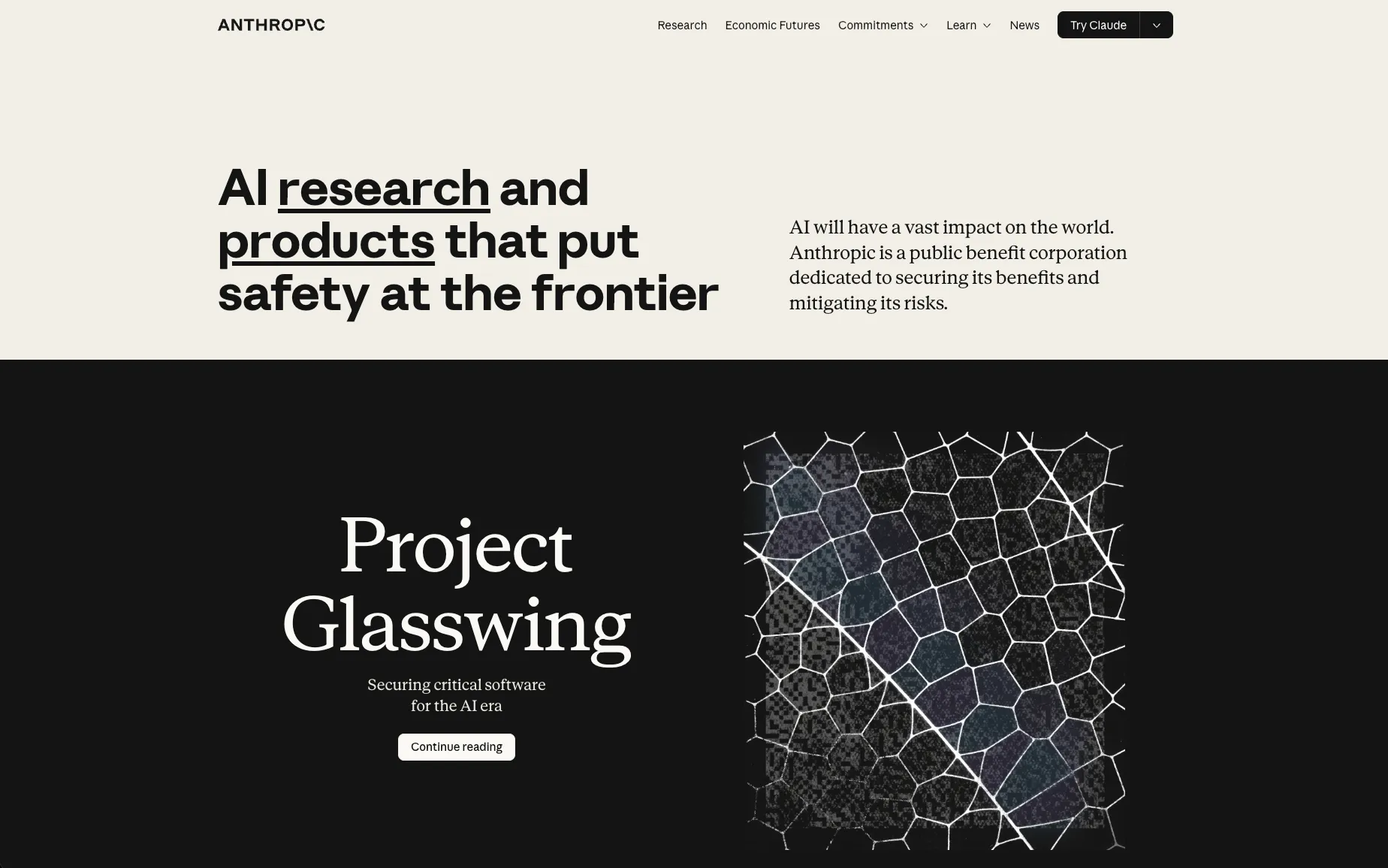
Use AI agents to delegate execution.
Once the data is ready, it's time to act. From routine tasks to code generation, agents move autonomously.
Case studies: building a design that doesn't fail — before implementation
Companies that were stuck in design — and how they started moving.
Why it stalled
Order management ran on fax and Excel with tribal knowledge. One absence brought operations to a halt.
What we designed
As-Is process inventory → Order management flow redesign → Tool selection criteria
How it runs now
Visualizing the workflow locked in operating rules before any tool was deployed.
Why it stalled
Three DX tools were deployed, but the shop floor never adopted them — all abandoned.
What we designed
Usage analysis → Department-level To-Be design → Phased rollout planning
How it runs now
Consolidated to 2 tools in 6 months. Adoption rate exceeded 80%.
Why it stalled
Quality control data was paper-based, making traceability compliance difficult.
What we designed
Current form analysis → Data field design → Operating model and accountability design
How it runs now
Operating design completed before digitization, enabling a smooth system rollout.
Why it stalled
Too many suppliers with quote comparison and lead time responses depending on one person. Cost and lead-time judgment criteria were tribal knowledge, causing growing rework.
What we designed
As-Is process inventory → Defining decision criteria → Quote-to-PO flow design → Approval & authorization design → KPI design
How it runs now
Purchase order decisions were standardized — anyone could make the same quality call. Emergency responses dropped and lead time delay risks became visible.
Why it stalled
Defect and complaint handling was reactive with no recurrence prevention. Inspection records were scattered, making tracing time-consuming.
What we designed
Quality To-Be design → Unified inspection and recording rules → Exception handling flow (defect / correction / re-inspection / shipping hold) → Weekly/monthly operating model design
How it runs now
Inspection and corrective decisions became consistent. Recurrence prevention became standard practice. "Where to stop" was clearly defined, speeding up quality response.
Why it stalled
Maintenance requests were scattered across email and phone, causing missed responses. Priority and assignment were unclear, leading to customer response delays.
What we designed
Inquiry channel consolidation → Receipt-to-resolution To-Be design → SLA and priority rules → RACI-based accountability → KPI design (first-response and completion time)
How it runs now
Response priority and accountability became clear, stabilizing customer service. Progress visibility strengthened coordination between sales and service.
Frequently Asked Questions
Where do we start?
Start with a free 30-minute consultation. We'll listen to your current challenges and recommend the right plan. You don't need to decide on next steps until after that conversation.
Can we also request implementation (system development)?
Yes. After the design phase, we'll clarify development scope, team structure, and budget before proposing a path forward.
How much internal time will this require?
We design the engagement to minimize your internal load. We'll show the required time commitment based on your current situation and team.
Can we consult before selecting any tools?
Absolutely. We'll start from your requirements, compare candidates, and build selection criteria from scratch.
Can we use an IT subsidy?
It depends on your situation. We'll work through the eligible scope and application requirements together.
Do you work with small companies (under 50 employees)?
Yes. We tailor the design scope and approach to match your scale.
Can everything be done online?
Yes. We run discovery, design sessions, and reviews entirely online.
Do you support NDAs?
Yes. We can execute an NDA using either your template or ours.
At the heart of DX: AI agents
that automate order management
The data and workflows you put in order with DX can be further accelerated by AI agents. Automatically generate RFQ and purchase order drafts, and answer internal data queries in natural language. Achieve a workflow where humans only press the final "GO" button.
See the Order Management AI Agent →Other Services
Procurement Outsourcing
Hand off RFQ management, lead time tracking, and all supplier communication to NEWJI.
Learn more →OEM / ODM Production
Manufacture finished goods through our OEM partner network in China. NEWJI Seisakusho supports you from prototype to mass production.
Learn more → NEW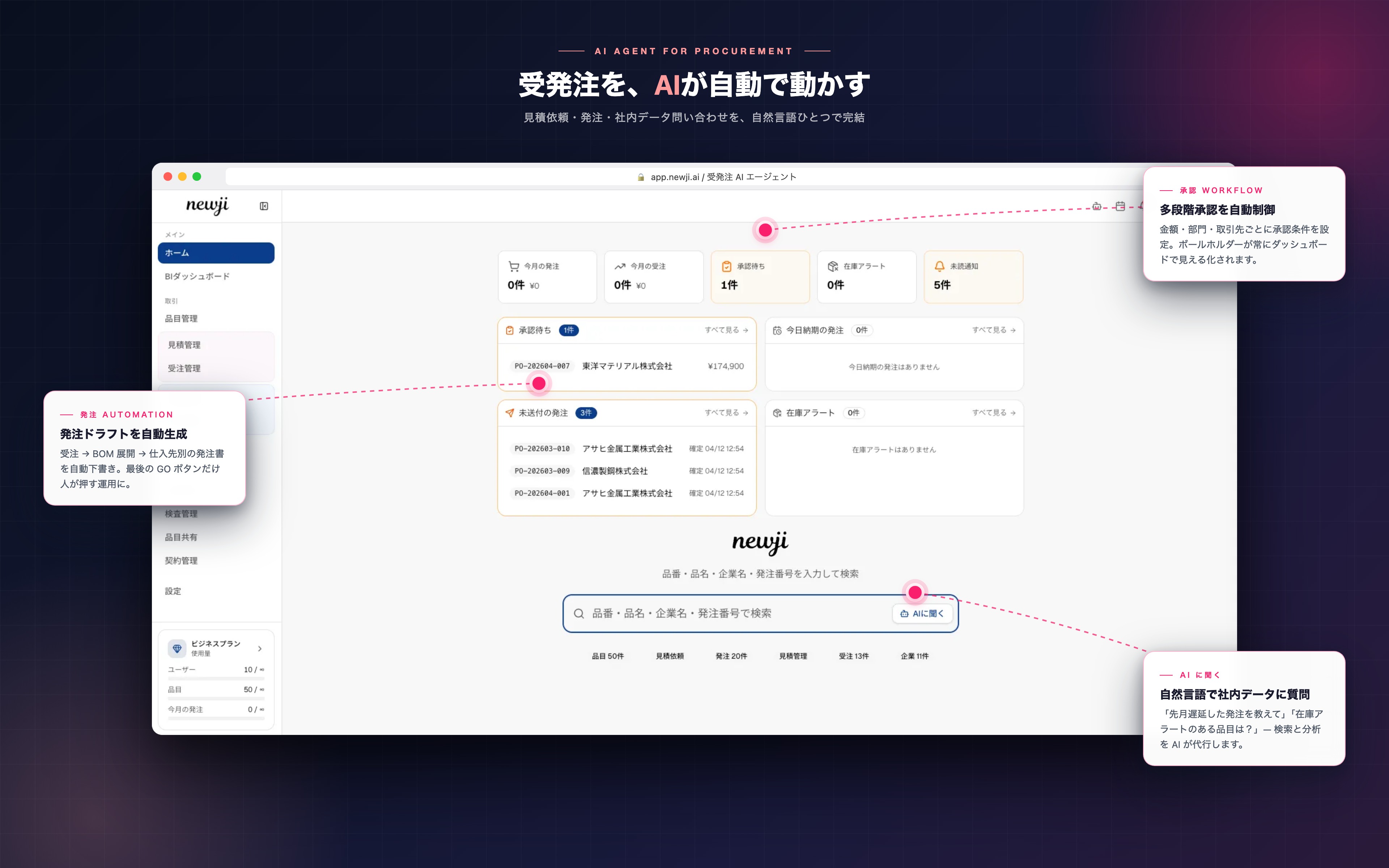
Order Management AI Agent
AI auto-drafts RFQs and purchase orders. Answer internal data queries entirely in natural language.
Learn more →Just tell us why your DX has stalled.
A 30-minute free consultation will clarify your next step.