

- お役立ち記事
- Bluetooth Low Energy (BLE) technology and its application to IoT systems

Bluetooth Low Energy (BLE) technology and its application to IoT systems

目次
Understanding Bluetooth Low Energy (BLE)
Bluetooth Low Energy (BLE) is a wireless communication technology known for its low power consumption and efficient data exchange capabilities.
Introduced as part of the Bluetooth 4.0 standard, BLE was designed to cater to devices that require continuous connectivity with minimal energy use.
This technology is particularly effective for applications in IoT (Internet of Things) systems, where battery-saving capabilities are paramount.
BLE operates on the 2.4 GHz ISM (Industrial, Scientific, and Medical) band, similar to classic Bluetooth, but it stands out due to its simplified protocol stack and reduced energy demands.
This makes it ideal for transmitting small amounts of data over short distances.
How BLE Works
BLE achieves low energy consumption through its efficient communication protocol.
It is designed to maintain a low duty cycle, meaning it spends most of its time in a sleep state and only wakes up to send or receive data.
This approach drastically reduces power usage compared to traditional Bluetooth technology.
The communication process involves two primary roles: the “central” device (such as a smartphone) and the “peripheral” device (like a smartwatch or sensor).
The central device initiates the connection, while the peripheral advertises its presence.
Once paired, data can be exchanged between the devices.
Key Features of BLE
1. Low Power Consumption
BLE’s most significant advantage is its minimal energy requirement.
This is crucial for battery-operated devices like fitness trackers or IoT sensors, which can operate for extended periods without requiring frequent charging.
2. Fast Connection and Reconnections
BLE is designed for quick connections and reconnections.
This feature is beneficial in IoT applications where devices frequently enter and exit operational states.
3. Cost-Effective
The scalability and cost-efficiency of BLE make it a popular choice for IoT devices, as it requires fewer resources to maintain its operations.
4. Wide Adoption
BLE is widely supported across a range of devices and platforms, including smartphones, tablets, and other wearable technology.
This widespread adoption facilitates ease of integration into existing systems.
Applications of BLE in IoT Systems
BLE’s unique attributes make it ideal for various IoT applications, helping to streamline operations and enhance user experiences.
1. Healthcare
In healthcare, BLE is used for patient monitoring devices like heart rate monitors and glucose sensors.
These wearables can collect health data and transmit it to healthcare providers in real-time, enabling continuous monitoring without invasive procedures.
2. Smart Homes
BLE underpins the technology in many smart home devices, such as lighting systems, thermostats, and security alarms.
With BLE, users can remotely adjust their home environment using smartphones or voice commands with minimal manual intervention.
3. Asset Tracking
BLE is employed in logistics and asset management, tracking the movement and condition of goods throughout the supply chain.
By attaching BLE beacons to packages, businesses can receive real-time updates on the location and status of their goods, improving operational efficiency.
4. Sports and Fitness
For sports and fitness enthusiasts, BLE-enabled devices like fitness trackers and smartwatches provide detailed insights into physical activities, including steps taken, calories burned, and sleep patterns.
This data helps users to track their progress and achieve their health goals.
5. Environmental Monitoring
BLE sensors can monitor environmental conditions, such as temperature, humidity, and air quality, making them invaluable for agriculture and industrial applications.
Farmers can use BLE to track weather conditions and make informed decisions about crop management.
Challenges and Considerations
While BLE offers numerous benefits, incorporating it into IoT systems requires careful consideration of certain challenges.
1. Limited Data Throughput
BLE is designed for transmitting small packets of data, which means it may not be suitable for applications requiring high data throughput.
For instance, streaming high-definition video would require more robust technology than BLE.
2. Range Limitations
The typical range of BLE is about 10 to 30 meters, which may be insufficient for some applications.
The presence of physical obstacles or interference from other wireless devices can further reduce this range.
3. Security Concerns
As with any wireless technology, there are security risks associated with BLE.
Unauthorized access and data breaches are potential threats that must be addressed through encryption and secure protocols.
4. Compatibility and Interoperability
Ensuring compatibility between BLE devices and diverse systems can be challenging, especially in environments with mixed technologies.
Manufacturers need to ensure that their devices can seamlessly integrate with existing IoT infrastructures.
The Future of BLE in IoT
The future of BLE in IoT looks promising, as advancements in technology continue to enhance its capabilities.
With the development of Bluetooth 5.0, improvements in range, speed, and broadcasting capacity are expected to broaden BLE’s application scope further.
BLE’s low power consumption, cost efficiency, and widespread adoption position it as a compelling technology for a wide range of IoT applications.
By addressing current challenges, BLE will continue to facilitate smarter, more connected environments.
As IoT ecosystems grow more complex, BLE’s role will likely expand, driving innovations that improve efficiency and connectivity across various sectors.
From enhancing healthcare solutions to optimizing smart home systems, the impact of BLE in IoT will undoubtedly be profound.
この記事の理解を深める
無料ホワイトペーパーをプレゼント
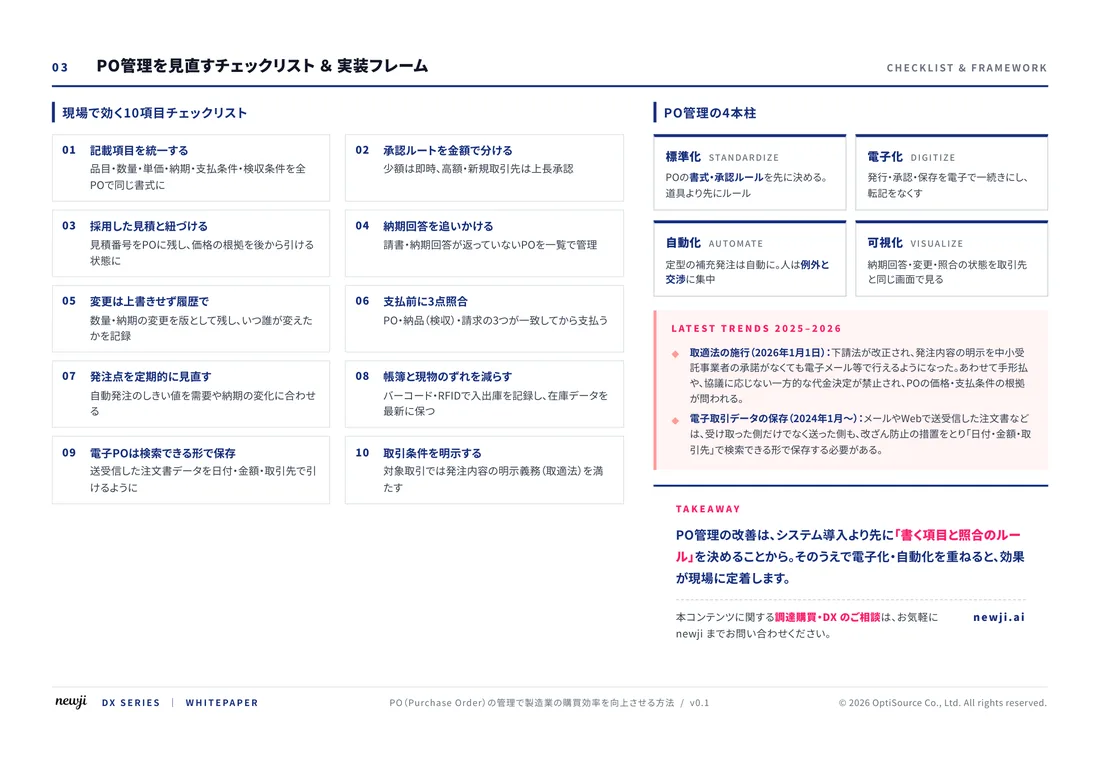
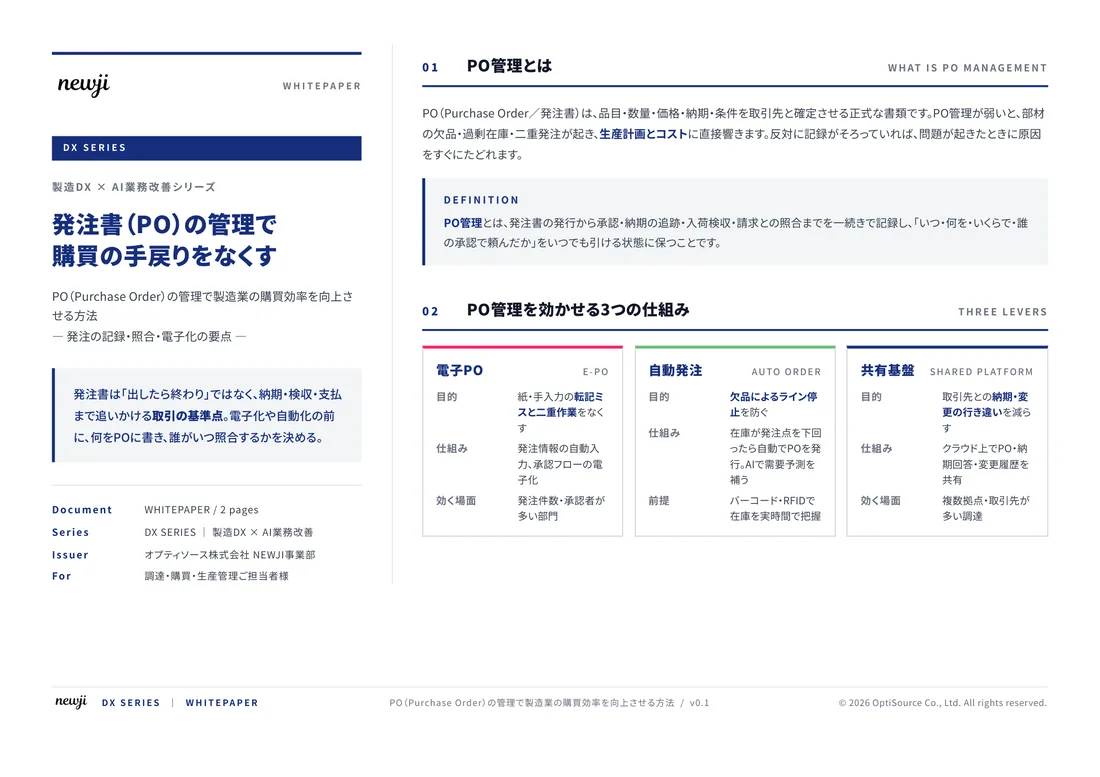
製造業の現場で使える実務資料(PDF)を無料でお届けします。"こんな資料が届きます" ↓ 下のボタンからどうぞ。
FREE DOCUMENT — サービス資料(PDF・無料)
製造業の見積・受発注クラウド
「Newji one」とは
Newji one は、製造業の調達・受発注に特化したクラウド/AIエージェント。見積依頼・発注書作成・進捗管理・承認をひとつの画面に集約し、AIが比較と異常検知を担当。最後の「GO」だけ人が押す仕組みです。
▶ 製造業の見積・受発注クラウド「Newji one」を、資料で見る(PDF・無料)
- 見積〜発注〜納期を一元管理。催促・転記のムダをゼロに
- AIが相見積もり比較と異常検知。あなたは判断だけに集中
- 取引先は「招待」で完全無料。自社コストだけで取引先ごとデジタル化
※ 取引先から招待された企業様は完全無料でご利用いただけます

 NEWJI総研
 OEM/ODM 生産委託
 AI/DX支援
 見積・発注クラウド Newji one
受発注が増えるほど、入力・確認・催促が重くなる。
受発注管理を“仕組み化“して、ミスと工数を削減しませんか。
見積・発注・納期まで一元管理できます。