

- お役立ち記事
- The Road to the Smart Factory A New Era Opened by DX in the Manufacturing Industry

その単価は妥当か。
AI が根拠付きで分析。
相見積の比較も発注も進捗管理も、ひとつの画面に。

The Road to the Smart Factory A New Era Opened by DX in the Manufacturing Industry
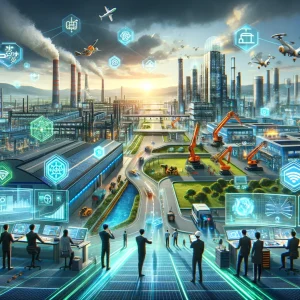
The manufacturing industry is on the cusp of a major transformation. Technologies like artificial intelligence, the Internet of Things, 3D printing, robotics, and analytics are coming together in what is being called the “smart factory.” This new era of digital manufacturing promises to revolutionize how products are designed, made, serviced, and even recycled. No longer confined to individual departments, data will flow freely across entire operations and value chains. Business processes and physical systems will work together seamlessly. Silos will break down as information is shared in real time. With intelligent, connected machines and people working together more closely than ever before, manufacturers will be able to increase productivity, quality and flexibility like never before.
This shift towards “Industry 4.0” or digital manufacturing is being driven primarily by technological developments in the areas of connectivity, data collection, computing power, artificial intelligence, analytics, and more. Network connectivity has advanced to the point where nearly any physical device can now be connected to share data and instructions over networks in real time. Technologies like radio-frequency identification (RFID) tags, sensors, cameras, and meters now allow manufacturers to automatically collect huge volumes of operational data from machines, physical assets, products and the production environment with more precision and at a lower cost than ever before.
Massive increases in raw computing power, both at the edge through devices like PLCs as well as in centralized cloud data centers, means this torrent of data can now be easily transferred, stored and analyzed. Advanced analytics techniques powered by AI, such as machine learning and computer vision, can then derive valuable insights and recommendations from these comprehensive data sets. Cutting edge technologies like additive manufacturing and collaborative robots are also helping drive the integration of information and physical processes by combining digital designs with automated production systems.
At the heart of the smart factory will be a digital twin – a virtual representation of the entire physical operation that uses real-time data to constantly model, simulate and optimize system performance. The digital twin aggregates all relevant operational data sources to accurately mirror the status, configuration, and interactions of physical equipment, facilities, processes and products down to the minute details. Through simulation and advanced analytics, the digital twin helps manufacturers test out “what if” scenarios to finetune processes without disrupting live operations. It guides technicians and assists human workers in real time to prevent issues, improve quality and suggest optimizations. Over time, it learns from extensive historical and real-time data to make increasingly accurate predictions about maintenance needs, bottlenecks, defects and more to drive continuous improvement.
The benefits of digitizing factory operations into an interactive “living model” like this are immense. For one, production flexibility and agility are greatly enhanced. With complete visibility into operations and the ability to test many scenarios virtually, manufacturers can quickly prototype, implement and scale up new production lines, products or processes. This ability to rapidly respond to changing demand with minimal retooling costs provides a key competitive differentiator. The smart factory also enables more optimized resource allocation across the supply chain through continuous right-resizing of inventories, capacities and schedules according to live demand signals. Downtime and unplanned maintenance incidents are reduced through precision condition monitoring and predictive analytics. Quality control is strengthened with real-time defect detection and closed-loop process adjustments.
Sustainability will be another notable advantage. Data-driven optimization can wring out inefficiencies across manufacturing flows to significantly cut energy, material and utility consumption. Analytics drawn from sensor-based activity monitoring helps minimize waste from over-production, expiration and spoilage. Real-time sustainability reporting based on sensor tags also boosts supply chain visibility and compliance. Outcome-based servicing business models relying on usage data instead of parts sales encourage original equipment manufacturers to design for longevity, reusability and recyclability.
The transformation towards smart, connected manufacturing has already begun for many leading industrial firms. GE has rolled out a Predix-powered “digital twin” platform that helps power plants detect performance issues and maximize uptime. Siemens uses an integrated digital enterprise suite to connect its machinery, drive predictive maintenance across 150 manufacturing sites, and gain insight into production flows to optimize inventory levels. Anheuser-Busch deployed an IoT system from Rockwell Automation to improve packaging line flexibility, drive double-digit efficiency gains and eliminate defects. Factories of the future will leverage such digital manufacturing systems to innovate new products faster and get more value from existing ones through continuous learning and optimization.
For small and medium manufacturers especially, the advent of affordable cloud-based manufacturing platforms democratizes access to cutting edge technologies once only available to large multinationals. Vendors now offer turnkey smart factory solutions covering sensors, edge gateways, cloud infrastructure, app development suites and consulting services
この記事の理解を深める
無料ホワイトペーパーをプレゼント
製造業の現場で使える実務資料(PDF)を無料でお届けします。"こんな資料が届きます" ↓ 下のボタンからどうぞ。


FREE DOCUMENT — サービス資料(PDF・無料)
見積依頼から比較まで、
ひとつの画面にまとめる方法
Newji one は、製造業の調達・受発注に特化したクラウド/AIエージェント。見積依頼・発注書作成・進捗管理・承認をひとつの画面に集約し、AIが比較と異常検知を担当。最後の「GO」だけ人が押す仕組みです。
▶ 見積依頼から比較までをひとつの画面にまとめる方法を、資料で見る(PDF・無料)
- 見積〜発注〜納期を一元管理。催促・転記のムダをゼロに
- AIが相見積もり比較と異常検知。あなたは判断だけに集中
- 取引先は「招待」で完全無料。自社コストだけで取引先ごとデジタル化
※ 取引先から招待された企業様は完全無料でご利用いただけます

 NEWJI総研
 OEM/ODM 生産委託
 AI/DX支援
 見積・発注クラウド Newji one
受発注が増えるほど、入力・確認・催促が重くなる。
受発注管理を“仕組み化“して、ミスと工数を削減しませんか。
見積・発注・納期まで一元管理できます。