

- お役立ち記事
- Confronting the Skills Gap Digital Training Programs for Manufacturing


Confronting the Skills Gap Digital Training Programs for Manufacturing
In today’s rapidly evolving manufacturing landscape, one of the biggest challenges faced by companies is the skills gap. As technology continues to advance, the need for a highly skilled workforce is more critical than ever. Traditional training programs often fall short in preparing workers for the digital transformation of the industry. To address this gap, many companies are turning to digital training programs to upskill their employees and meet the demands of the modern manufacturing environment.
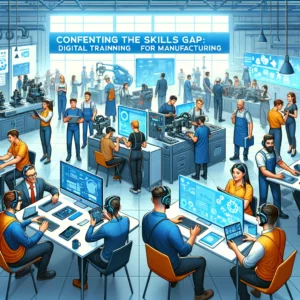
Digital training programs are revolutionizing the manufacturing industry by providing tailored, interactive, and engaging training solutions that enable workers to acquire the skills needed to operate in a digitalized manufacturing setting. These programs leverage advanced technologies such as augmented reality, virtual reality, and artificial intelligence to offer immersive learning experiences that are both effective and efficient.
By incorporating real-time simulations, hands-on exercises, and interactive modules, digital training programs allow employees to learn at their own pace and in a way that suits their individual learning styles. This personalized approach not only enhances retention and comprehension but also boosts engagement and motivation among employees.
Furthermore, digital training programs enable companies to overcome geographical barriers and train a geographically dispersed workforce simultaneously. With remote access and flexible scheduling, employees can access training modules anytime, anywhere, making it easier for companies to upskill their workforce without disrupting operations.
Moreover, these programs provide companies with valuable data and insights into the progress and performance of employees, allowing for continuous improvement and optimization of training strategies. By tracking key metrics such as completion rates, assessment scores, and engagement levels, companies can identify areas of improvement and tailor training programs to better meet the needs of their workforce.
In conclusion, digital training programs are playing a vital role in bridging the skills gap in the manufacturing industry. By offering innovative, personalized, and accessible training solutions, companies can empower their workforce with the skills needed to thrive in an increasingly digitalized environment. Embracing these programs is essential for companies looking to stay competitive, drive innovation, and succeed in the future of manufacturing.
関連記事
-

Overcoming the Digital Skills Gap in Manufacturing
-

Streamlining Worker Training? Innovations in Worker Training in Manufacturing
-
The Fusion of Digital and Reality AR/VR in Manufacturing
-
Workforce Development and Skills Innovation in Education for Manufacturing DX
-
Digital Workflow in Manufacturing! A Smart Approach to Transform Productivity
-
Supply Chain Optimization Digital Tools to Solve Manufacturing Challenges

 調達購買アウトソーシング
 OEM/ODM 生産委託
 NEWJI DX
 受発注AIエージェント