

- お役立ち記事
- Customization and flexibility Demand-driven manufacturing


Customization and flexibility Demand-driven manufacturing
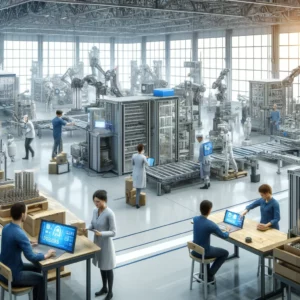
Manufacturing companies are always looking for ways to improve their businesses and keep up with customer demands. Two big trends they are focusing on more than ever are customization and flexibility. Customers want products made just for them, with the features and options they want. They also want companies to be able to respond quickly to changes. This is leading many manufacturers toward a new approach – demand-driven manufacturing.
Demand-driven manufacturing is all about being responsive to customers. Instead of mass producing large volumes of standard products, companies produce smaller batches based on actual customer orders and demands. They build products according to the specific requirements of each order. This allows for much greater customization. A shoe company could make any style, color, or size combination a customer wants rather than only certain pre-set versions. A furniture maker could offer thousands of fabric and wood finish options.
Being demand-driven also means companies focus on flexibility. They work to streamline their operations so they can quickly adjust production and shift priorities. This might mean using modular machine tools that can switch between different processes. It could involve employing versatile robots that can handle diverse tasks. Companies optimize their supply chains to deliver custom components and materials on short notice. They train employees so production staff can easily move between different product lines. All of this flexibility enables rapid response to changing customer and market demands.
The main benefits of demand-driven manufacturing are improved customer satisfaction and competitive advantage. Customers get exactly what they want, when they want it. This level of customization and personalized customer service leads to strong brand loyalty. Companies also gain an edge over mass producers that only offer standardized items. Being responsive gives insight into evolving customer needs and allows fast action. It avoids costs from over-production of unpopular standard models or slow response to new product launches.
Of course, becoming demand-driven requires investment and operational changes. Production planning must shift from bulk forecast-based to an ongoing process focused on current demand signals. Companies need real-time visibility into customer orders, inventory levels, and the status of all production tasks. They require integrated IT systems to connect this data across the enterprise in a seamless manner. Production facilities need retooling and flexible equipment to support multiple product lines and quick changeovers. The workforce must develop new collaborative skills for on-the-fly problem-solving.
However, the potential benefits far outweigh the challenges. Being demand-driven supports higher profitability through greater customer loyalty and competitive pricing power. As goods become increasingly commoditized, customization and responsiveness are key ways manufacturers can differentiate their offerings. A study by McKinsey found companies practicing demand-driven principles experienced 10-20% higher operation margins on average. Demand-driven firms also reported 20% lower inventory levels and 15% faster inventory turns due to precise matching of production to current demand.
New technologies are also enabling the shift to demand-driven models. Advanced 3D printing and additive manufacturing allow on-site, on-demand production of diverse custom parts without tooling costs. The Industrial Internet of Things facilitates real-time data collection and integration across the extended supply chain. In-memory computing provides the processing power required to respond to changing conditions within seconds. Robotic process automation takes over routine production tasks, freeing up workers for flexible, value-added jobs. As technology costs fall, these solutions are within reach of even mid-sized companies.
Overall, demand-driven manufacturing represents the future for companies wanting to stay ahead of today’s hyper-customization trends. Those who make the transition will be well positioned to unlock major competitive advantages through operational agility, cost efficiency and unmatched responsiveness to their customers. While change is involved, the benefits of increased revenue, profits, and customer satisfaction make demand-driven principles well worth adopting for any manufacturer striving for long term sustainable growth.
関連記事
-

Improving Customer Satisfaction The Importance of Customization and Flexibility in Manufacturing
-

Streamlining Manufacturing Processes with Smart Inventory Management
-
Data Driven Manufacturing Shaping the Future with Predictive Analytics
-
Decision Making from Data Driven is the Strategic Approach in Manufacturing
-
DX Revolutionizing Manufacturing Supply Chain Optimization
-
The Power of Digital Transformation to Change the Future of Manufacturing

 調達購買アウトソーシング
 OEM/ODM 生産委託
 NEWJI DX
 受発注AIエージェント